







Most home service businesses don’t have a traffic problem. They have a lead quality problem. Home services lead generation looks simple on paper, but generating calls from homeowners who are ready to hire, not just browsing, is where most contractors and service companies stall out. This guide covers 10 proven digital strategies, a direct comparison of their costs and trade-offs, and a framework for choosing what works at your business size and budget. Every tactic here is grounded in how the market actually behaves in 2026, not how platforms say it should work.
Table of Contents
- Key takeaways
- How to evaluate home services lead generation methods
- 10 effective digital lead generation strategies for home service businesses
- Comparing lead generation strategies: cost, quality, and responsiveness
- How to choose and combine the best lead generation tactics
- My take on home services lead generation in 2026
- How Adjetmarketing can help you generate better leads
- FAQ
Key takeaways
| Point | Details |
|---|---|
| Speed to contact wins jobs | Contacting a lead within 5 minutes dramatically increases your odds of qualifying and booking. |
| Quality beats volume every time | Fewer high-intent leads outperform a flood of unqualified inquiries in both conversion rate and cost. |
| Mix your lead sources | Relying on one channel creates fragility; combining LSAs, SEO, and paid ads stabilizes lead flow. |
| Response systems matter as much as ads | Even the best campaign fails if your follow-up process is slow or inconsistent. |
| Track cost per booked job, not cost per lead | The metric that matters is how much revenue each lead source actually produces. |
How to evaluate home services lead generation methods
Before you spend a dollar on any platform or campaign, you need a framework for comparing your options objectively. Not every lead source that sounds good on a sales call will actually fit your business.
Here are the criteria that matter most:
- Lead intent: Did the homeowner actively search for your service, or were they targeted passively? High-intent leads convert faster and require less convincing.
- Lead delivery speed: Lead vendor evaluation criteria include delivery speed and the quality of homeowner project context provided. The faster and richer the data, the better your first conversation.
- Cost per lead vs. cost per booked job: A $15 lead that never converts costs more than a $75 lead that books 40% of the time. Track downstream revenue, not just acquisition cost.
- Exclusivity: Exclusivity contracts and fallback sharing mechanisms determine whether the same lead goes to three of your competitors simultaneously. Read the fine print.
- Integration with your sales workflow: A lead delivered by text while your team uses a CRM that only accepts email creates friction and delays.
- Transparency and analytics: Can you see which campaigns, keywords, or platforms are generating your best jobs? If a vendor can’t show you that data, walk away.
Pro Tip: Before signing with any lead generation platform, ask them directly: “How many contractors in my zip code receive the same lead?” If they can’t answer clearly, treat that lead as shared.
10 effective digital lead generation strategies for home service businesses
1. Google Local Services Ads (LSAs)
Google LSAs sit above regular search results and above standard pay-per-click ads. You pay per lead contact, not per click, which removes a significant source of wasted spend. More importantly, LSAs display verification badges that signal to homeowners your business has passed background checks and licensing verification. That trust signal alone increases booking rates compared to standard ads.
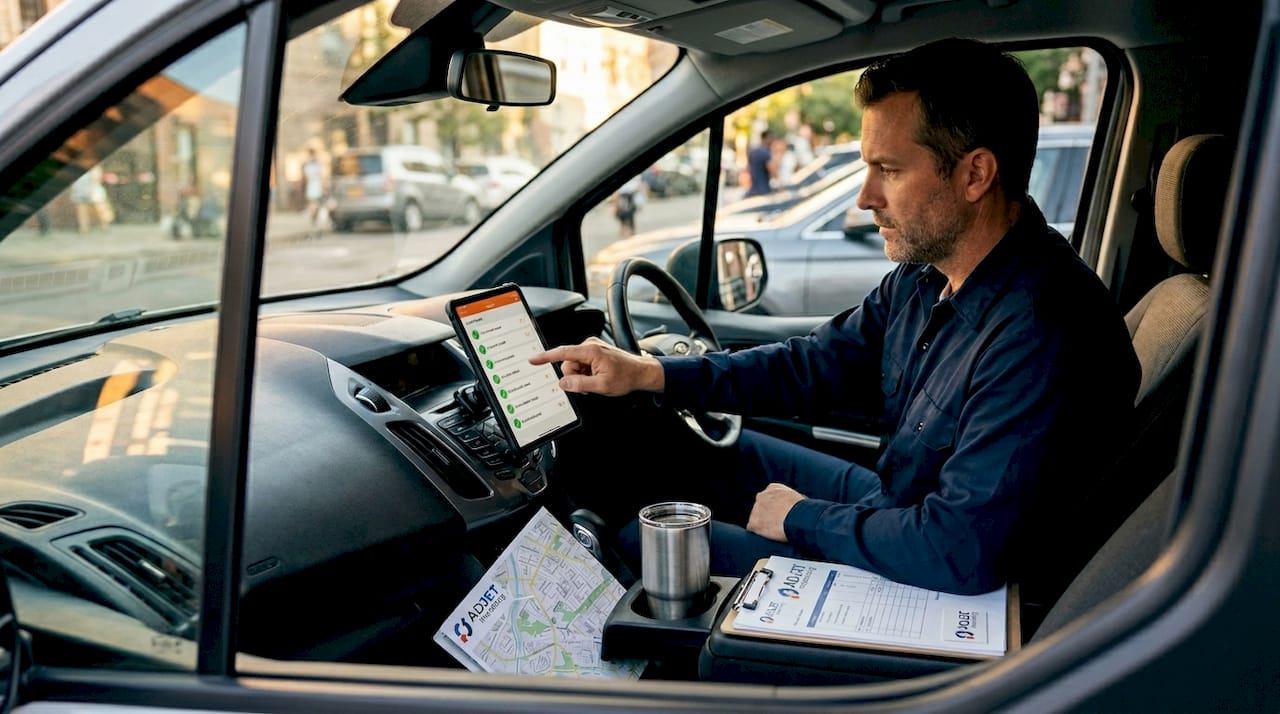
The catch: slow or missed lead responses directly reduce your ad visibility within the platform. Google monitors your response behavior and rewards fast responders with better placement.
2. Optimized Google Business Profile with local SEO
Your Google Business Profile is a closing surface, not just a directory listing. When it includes verified reviews, accurate service categories, photos, and regular posts, it functions as a trust checkpoint that converts search traffic into calls without any ad spend. Pairing this with local SEO strategies that target neighborhood-level keywords gives you organic visibility that compounds over time.
This channel takes 3 to 6 months to build real momentum, but the cost per lead drops steadily as rankings improve.
3. Pay-per-click advertising (Google Ads)
Google Ads gives you speed and precision. You can be at the top of search results for “emergency HVAC repair” or “roof leak fix” within hours of launching a campaign. The trade-off is cost. Competitive home service keywords in major markets regularly run $20 to $80 per click. Without a tightly structured campaign and a high-converting landing page, that spend evaporates fast.
When managed correctly, Google Ads management lets you control which services, geographies, and times of day your ads appear, giving you a level of targeting that organic search cannot match immediately.
4. Lead generation platforms (Angi, Thumbtack, HomeAdvisor)
These platforms connect homeowners actively seeking services with local contractors. The upside is immediate access to ready-to-hire leads. The downside is that most of these leads are shared with multiple businesses simultaneously, and homeowner intent data and performance feedback varies significantly by platform and market.
If you use these platforms, treat response speed as your primary competitive advantage. You are often competing with three to five other contractors for the same homeowner.
5. Facebook and Instagram lead ads
Social media lead ads work differently from search. Homeowners are not actively searching for your service when they see your ad. That means intent is lower, but audience targeting can be precise. You can reach homeowners in specific zip codes within specific income brackets who have shown interest in home improvement content.
These platforms work best for generating demand around services homeowners delay, such as window replacement, landscaping, or bathroom remodeling, rather than emergency repairs.
6. Referral programs and review solicitation
Word-of-mouth has always driven home service businesses. A structured referral program formalizes that process. Offer existing customers a discount or gift card for referring neighbors, and ask every completed job for a Google review while you are still on-site.
A well-maintained Google Business Profile integrated with your referral strategy creates a compound trust effect where new leads see both your ads and your reviews before they call.
7. Content marketing and educational resources
Publishing helpful articles and videos around topics homeowners search, such as “how to know if your water heater needs replacement” or “signs of roof damage after a storm,” builds organic search traffic over time. This strategy generates home service leads with high intent because the homeowner is already researching a problem you solve.
Content marketing rarely produces immediate results. Plan for a 6 to 12 month runway before organic content becomes a reliable lead source.
8. Email marketing and re-engagement campaigns
Past customers are your warmest audience. A simple email sequence reminding previous clients about seasonal maintenance, upcoming service windows, or referral incentives generates repeat business at a fraction of the cost of new customer acquisition. Many home service businesses ignore this channel entirely, which is a straightforward opportunity.
Segment your list by service type so a plumbing customer gets plumbing-relevant content, not HVAC promotions they have no use for.
9. AI-powered lead follow-up systems
Lead speed and routing impact lead conversion more than the acquisition channel itself. AI-powered CRM tools and automated SMS follow-up systems can contact a new lead within 60 seconds of form submission, even at 9 PM. These tools triage by service type, territory, and urgency before routing to a human dispatcher.
For businesses running at volume, this is no longer optional. It is the difference between booking a job and losing it to a competitor who responded first.
10. Strategic partnerships with home improvement vendors
Partnering with complementary businesses creates a referral pipeline that costs very little to maintain. A roofing company that has a formal referral relationship with a gutter installer, a remodeling company, and a real estate agent builds a steady flow of warm introductions. These leads arrive with existing trust baked in, which shortens the sales cycle considerably.
Pro Tip: When building vendor partnerships, create a simple one-page agreement that defines how referrals will be tracked and reciprocated. Informal handshake deals rarely produce consistent volume.
Here is a quick summary of what each strategy delivers:
| Strategy | Lead Intent | Speed to Results | Avg. Cost per Lead |
|---|---|---|---|
| Google LSAs | Very High | Fast (1-2 weeks) | $20–$80 |
| Google Business Profile / SEO | High | Slow (3-6 months) | Low ($5–$20) |
| Google Ads (PPC) | High | Fast (days) | $25–$100+ |
| Angi / Thumbtack / HomeAdvisor | Medium | Immediate | $15–$60 (shared) |
| Facebook / Instagram Ads | Medium-Low | Medium (2-4 weeks) | $10–$40 |
| Referrals and Reviews | Very High | Slow to build | Near zero |
| Content Marketing | High | Slow (6-12 months) | Very Low |
| Email Re-engagement | Very High | Fast (immediate) | Near zero |
| AI Lead Follow-up | Depends on source | Immediate | Tool cost only |
| Vendor Partnerships | Very High | Medium to build | Near zero |
Comparing lead generation strategies: cost, quality, and responsiveness
The table above gives you numbers. Here is what those numbers mean in practice.
Contacting a lead within 5 minutes is associated with roughly 21 times higher odds of qualifying that lead compared to waiting 30 minutes. That single data point should reshape how you think about every strategy above. A $100 lead you contact in 4 minutes outperforms a $20 lead you respond to the next morning.
The industry average for first response time is 42 hours. Only 7% of companies respond within 5 minutes, and 55% take more than 5 business days. If you build a response system that consistently hits under 10 minutes, you will outperform most of your market regardless of which lead channel you use.
On cost and exclusivity, LSAs and Google Ads deliver high-intent leads but charge accordingly. Platforms like Angi lower the entry cost but share leads broadly. Referrals and content marketing carry near-zero cost per lead but require time and infrastructure to build. The right mix depends on your cash flow, your capacity to handle volume, and how quickly you need results.
Improving lead intake and response workflows applies across industries because the fundamental problem is the same: a qualified inquiry that goes unanswered is a lost opportunity regardless of what sector you are in.
How to choose and combine the best lead generation tactics
No single channel will carry your entire lead pipeline reliably. The businesses that grow consistently use a layered approach, where paid channels provide immediate volume while organic and referral channels reduce cost per acquisition over time.
Here is a practical framework for building your mix:
- Start with what produces results fast. If you need leads this month, LSAs and Google Ads are your starting point. They require budget but deliver quickly.
- Build organic assets in parallel. SEO and Google Business Profile optimization run in the background while your paid campaigns run. In 6 months, they start offsetting paid costs.
- Add lead platforms selectively. Platforms like Angi work better in markets where your brand is not yet established. As your reputation grows, their relative value decreases.
- Automate follow-up before you scale. Quick referral response times and immediate follow-up are the clearest ways to increase conversions without increasing spend.
- Review performance monthly. Track cost per booked job by channel, not just cost per lead. Cut what does not convert. Scale what does.
Pro Tip: Set a 90-day test window for any new lead channel. Evaluate it on cost per booked job, not just lead volume. Many channels look expensive in the first month and become efficient by month three as targeting improves.
My take on home services lead generation in 2026
I’ve worked with enough home service businesses to say this clearly: the biggest gap between contractors who grow and those who plateau is not budget. It’s response time and lead quality discipline.
I’ve seen companies spending $10,000 a month on Google Ads and booking less than they should because their follow-up process is two business days. I’ve also seen smaller operations with a fraction of that budget dominate their local market simply because someone calls back within five minutes, every time. The digital marketing investment only pays off when your operational side can match the speed that digital channels demand.
The other pattern I’ve noticed is that many home service businesses chase lead volume as a proxy for progress. They want 200 leads a month when 60 well-qualified leads from targeted channels would generate more revenue with less overhead. Volume feels like momentum. Quality is what actually converts.
In 2026, the businesses winning in competitive home service markets are the ones that have combined paid visibility with strong local SEO, disciplined follow-up automation, and a referral system that keeps past customers sending new ones. None of those things require a massive budget. They require consistency and the willingness to track what actually matters.
— Felix
How Adjetmarketing can help you generate better leads
At Adjetmarketing, we work with home service businesses that are tired of paying for leads that go nowhere. Our approach starts with understanding your specific services, market, and sales capacity, then building a digital marketing strategy that fits your actual goals, not a generic template.
We set up and manage Google Local Services Ads, run targeted PPC campaigns, and build the local SEO foundation that drives organic leads over time. Every campaign we manage is tracked back to booked jobs, not just clicks. If you are ready to move from inconsistent lead flow to a predictable pipeline, our team can show you exactly what that looks like for your business and market.
FAQ
What is the fastest way to generate home service leads?
Google Local Services Ads and Google Ads produce leads within days of launching. LSAs are particularly efficient because you pay per lead contact rather than per click.
How quickly should I respond to a new lead?
Responding within 5 minutes gives you roughly 21 times higher odds of qualifying the lead compared to waiting 30 minutes. Automated SMS follow-up tools can help you hit that window consistently.
Are shared leads worth buying?
Shared leads can work if your response time is faster than competitors receiving the same lead. If your team cannot respond within minutes, shared leads are rarely a good investment.
How long does local SEO take to generate leads?
Local SEO typically takes 3 to 6 months to produce consistent organic leads. It requires less ongoing spend than paid ads but demands patience and consistent content and profile management.
What metrics should I track for lead generation performance?
Track cost per booked job by channel, response time to new leads, and close rate by lead source. These three metrics tell you more than lead volume or cost per lead alone.
Recommended
- What’s The Best Way To Get Real Estate Leads? | 10 Scalable Lead Gen Hacks – AdJet Digital Marketing & Google Partner Agency | SEO Development Google Ads Social
- How To Get High-quality Real Estate Leads Online
- How Do I Get More Listings As A Realtor? | Strategies That Sellers Trust – AdJet Digital Marketing & Google Partner Agency | SEO Development Google Ads Social
- Digital Marketing Strategies That Grow Real Estate Leads