







The content mix that works best for med spas blends short-form video, before-and-after social proof, quick education, patient-generated content, and promotions tied directly to a booking link. This combination works because it covers discovery, builds trust, and closes the loop with a clear next step. Give it a few weeks of consistent posting, and you’ll start seeing it show up in actual appointments, not just likes.
TL;DR:
- Post three to five short videos weekly, add an educational carousel and a promotion, and give each post a clear booking call to action.
- Use month one to test videos and transformations, month two to add educational carousels and patient content, and month three to test promotions.
- Get written authorization before recording patients, disclose paid partnerships and incentivized reviews, and avoid guaranteed outcome claims unless realistic risks are also stated.
- Track social bookings, Reel plays, booking page clicks, and engagement rate; assess each content pillar for four to eight weeks before changing course.
- Keep content in house if a staff member has one or two hours weekly; seek outside help when compliance, ads, or landing pages overwhelm them.
Table of Contents
- 1. Ideas that move patients from scroll to booked
- 2. How to plan, batch, and measure your content calendar
- 3. Compliance guardrails for HIPAA, FTC, and FDA rules
- 4. What a small clinic actually needs to run this plan
- 3 content mistakes we see most often
- Turning your content plan into booked appointments
- FAQ
- Sources
1. Ideas that move patients from scroll to booked
A strong content calendar needs ideas for every stage: getting found, earning trust, teaching, converting, and keeping patients coming back. Here’s a working set you can pull from this week.
Discovery (get found by new people):
- Treatment preview reels (15 to 30 seconds): Film a quick, real-time clip of a popular service like microneedling or a HydraFacial. Caption prompt: “Here’s what a [treatment] appointment actually looks like.” Repurpose into a Story highlight.
- Trending audio with a local hook: Pair a popular sound with a line like “Booking [treatment] in [your city] just got easier.” Keep the CTA in the caption, not buried in comments.
- “Treatment in 30 seconds” format: A tight, fast-cut explainer of one service. This works as a pinned video on your profile since new visitors watch it first.
Trust (prove it works):
- Before-and-after posts: Pair the image with a short clinician caption noting the treatment, number of sessions, and timeframe. Written consent should be on file before you post, a point covered in detail in our guide to before and after photos in medspa marketing.
- Time-lapse transformations: Useful for longer protocols like laser series. Always note the real timeframe so expectations stay honest.
- Practitioner spotlights: A 30-second clip introducing the injector or esthetician performing a procedure. This humanizes the clinic and supports your before and after rules guide on pairing imagery with credentialed staff.
- “Day in the clinic” behind-the-scenes clips: Show the sterilization process, a consult room, or a team huddle. Low production, high trust.
UGC and testimonials:
- Patient reaction clips: With written consent, capture a genuine reaction right after a treatment. Caption template: “We didn’t script this. [Name]’s reaction after her first [treatment].”
- Branded hashtag mechanics: Create one hashtag, ask patients to tag you, and repost with credit and consent noted in the caption.
Educational:
- Ingredient and modality explainers: A carousel comparing a chemical peel to a laser resurfacing treatment, written in plain language.
- Myth-busting carousels: Address common misconceptions, like the belief that Botox looks “frozen” when dosed correctly.
- “What to expect” reels: A short walkthrough of a consult, covering downtime and aftercare for a specific service.
Promotions and retention:
- Membership launch posts: Announce loyalty pricing with a clear sign-up link.
- Last-minute slot fills: Use SMS or Stories to offer a same-day discount for an open appointment.
- Themed open-house events: A seasonal skincare night doubles as a content shoot and a lead-gen event.
Pro Tip: Shoot once, publish five times: one treatment reel becomes three short cuts, two Story clips, and one newsletter blurb, each with its own caption angle.
Every idea needs a one-line CTA, whether it’s “book your consult,” “DM us to ask,” “link in bio,” or “join our VIP list.” Vague captions without any next step waste the production effort you already put in.
2. How to plan, batch, and measure your content calendar
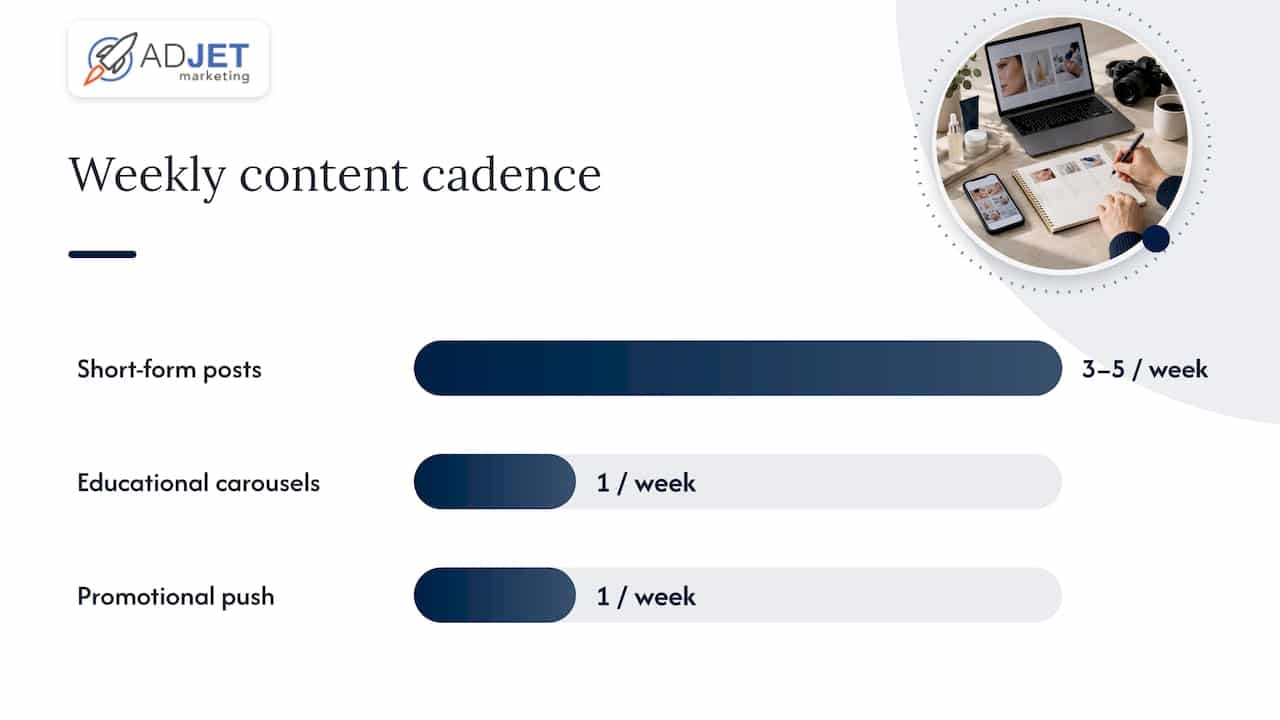
You don’t need a daily posting habit to see results. A realistic cadence is three to five short-form posts per week, one educational carousel, and one promotional push, which matches what industry reporting on spa marketing strategies found gave the best algorithm traction in recent case studies.
A simple rollout:
- Days 1 to 30: Test short-form video and before-and-afters to see what resonates.
- Days 31 to 60: Add educational carousels and one UGC campaign.
- Days 61 to 90: Layer in promotions and measure booking attribution.
Batch production workflow:
- Film two treatment reels in one morning session.
- Edit each into two or three shorter clips for different platforms.
- Schedule the full batch across the week using a native scheduler or a tool like Later or Metricool.
Repurposing matrix: a Reel becomes a Story teaser, a feed post with a longer caption, a newsletter blurb, and a short SMS line for your VIP list. Trim detail as you move down that chain since SMS needs one sentence, not three.
Track four numbers: bookings attributed to social, reel plays, click-through rate to your booking page, and engagement rate. Give each pillar four to eight weeks before judging it, since social proof content tends to compound slower than paid promotions. Boost a post with a small budget only once it’s already outperforming your average, then funnel that traffic to a dedicated landing page rather than your general homepage.
3. Compliance guardrails for HIPAA, FTC, and FDA rules
Content that looks harmless can still create real legal exposure. The HIPAA Privacy Rule requires written authorization before filming patients in treatment areas, and blurring a face after the fact doesn’t fix a consent problem that should have been handled before recording.
- HIPAA: Get written authorization before filming any patient, or use staged models and clearly labeled stock content instead.
- FTC: Disclose paid partnerships and incentivized reviews clearly, using language like “paid partnership” or “sponsored by,” since the FTC has taken enforcement action against brands using unsubstantiated or fake testimonials.
- FDA: Avoid claiming guaranteed results, and pair any efficacy statement with realistic risk information. The FDA has warned companies over promotional materials that overstate aesthetic treatment outcomes.
Quick consent checklist: patient name and treatment documented, written signature on file, and a line confirming the patient understands where the content will be posted.
4. What a small clinic actually needs to run this plan
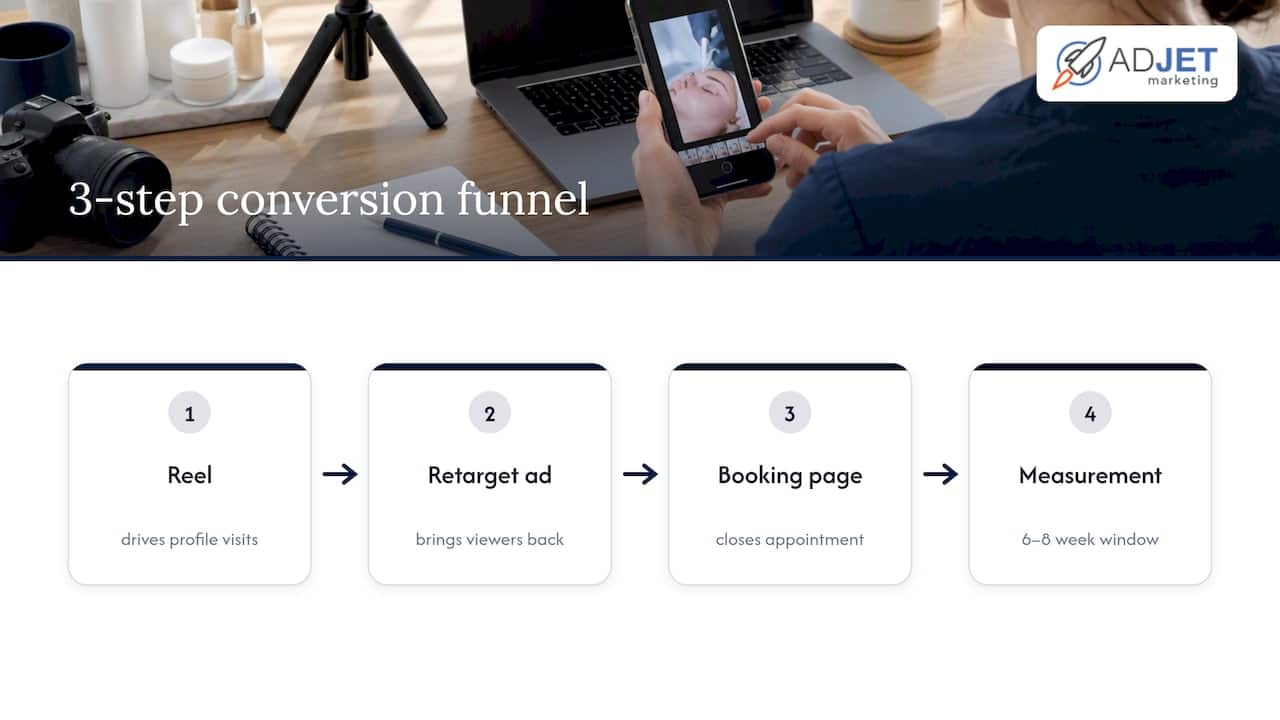
A typical funnel looks like this: a short-form Reel drives profile visits, a retargeting ad brings viewers back, and a custom website with integrated booking landing page closes the appointment, usually showing measurable movement within six to eight weeks. Our medical spa marketing case study walks through a similar structure.
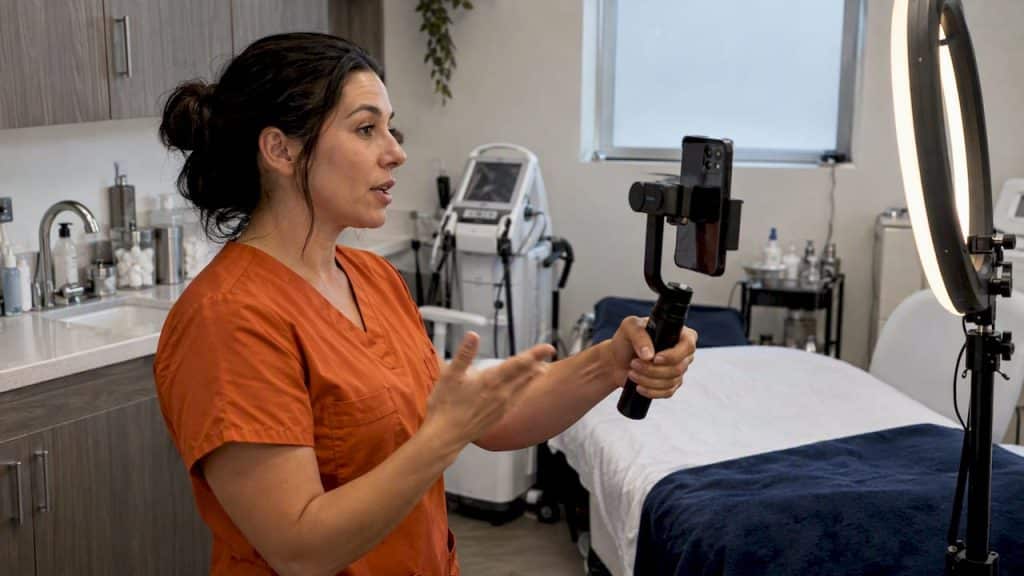
Doing this in-house works when someone on staff has an hour or two a week and basic comfort with a phone camera. Hiring an agency makes more sense once compliance risk, ad management, or landing page design starts eating time you don’t have. The minimum toolkit is a phone with a stabilizer, a basic ring light, a signed consent form, and a booking page: a custom landing page tends to pay off once you’re running paid traffic to it instead of just organic posts.
3 content mistakes we see most often
Clinics chase a trending sound with no CTA, then wonder why it didn’t convert: always pair a trend with a booking link. Others post patient photos without documented consent, which a one-page consent workflow fixes immediately. And many never track which post actually drove a booking, which a simple UTM link and a small landing page solves in an afternoon.
— Felix
Turning your content plan into booked appointments
Producing consistent, compliant content takes real time, and that’s exactly the gap we fill for med spa teams who’d rather hand off production than squeeze it into an already full week. We build social media marketing for med spas, paired with landing pages and retargeting ads, so the Reels and transformation posts you publish actually funnel into tracked bookings rather than disappearing into a feed.
- We produce and schedule short-form video and promotional content on a consistent cadence.
- We build booking-focused landing pages that match the offer in your captions.
- We set up retargeting so viewers who didn’t book on the first visit see your offer again.
If you’d rather see what a managed setup looks like before committing, our landing page design plans start with a Starter Plan at $299 per month, with a Premium Plan at $1,500 per month for clinics running heavier paid traffic.
FAQ
What are some good content ideas?
Short-form treatment previews, before-and-after posts with documented consent, practitioner spotlights, and educational carousels explaining ingredients or procedures tend to perform consistently well. Pair each with a clear CTA like “book your consult” so the content has somewhere to send interested viewers.
What are the current trends in the med spa industry?
Short-form video on platforms like Instagram and TikTok is currently the main discovery engine for new patients, working alongside local SEO to capture booking-intent searches, according to spa marketing analysis. Email and SMS sequences are typically used to handle retention once a patient has booked once.
What are the most profitable med spa services?
Profitability varies by clinic and region, so there’s no single universal answer, but injectables, laser treatments, and membership-based skincare packages are commonly cited as strong revenue drivers because they combine recurring visits with higher per-session pricing.
What are the top spa trends for 2026?
Frequent, authentic short-form video content, patient-generated testimonials with clear consent, and membership or loyalty programs are shaping spa marketing heading into 2026, based on recent industry reporting. Clinics combining consistent posting with local SEO tend to see the strongest discovery results.
Sources
- Effective strategies to market a spa business in 2026 | Sarasota Magazine
- Guidance on Covered Health Care Providers and Restrictions on Media Access to Protected Health Information about Individuals in Their Facilities
- FDA warns companies over illegal marketing of Botox and related products
- FTC takes action against TruHeight for deceptive and unsubstantiated advertising