









Most real estate agents assume marketing means posting on Instagram three times a week or running a few Facebook ads. That assumption is exactly why so many agents spend money and see little return. Effective realtor marketing services are built on a systematic, multi-channel approach that combines digital visibility, lead capture infrastructure, and consistent follow-up. This guide breaks down what those services actually look like, how to evaluate providers, which strategies produce quality leads over time, and how to measure whether your investment is working.
Table of Contents
- Key takeaways
- What realtor marketing services actually include
- How to evaluate real estate marketing service providers
- Strategies to maximize lead generation and visibility
- Metrics and tools to track marketing performance
- My honest take on what actually works
- How Adjetmarketing helps realtors grow their business
- FAQ
Key takeaways
| Point | Details |
|---|---|
| Multi-channel beats single-channel | Combining SEO, paid ads, email, and community outreach produces more consistent leads than any one tactic alone. |
| Organic content reduces ad spend | Agents using hyperlocal content and lead magnets generate 30 to 40% of inbound leads without paid advertising. |
| Choose providers by lead exclusivity | Non-exclusive leads from third-party platforms convert at lower rates than self-generated leads through owned channels. |
| AI tools save meaningful time | Automation platforms can save agents up to 65 hours monthly while maintaining consistent brand presence. |
| Track metrics that matter | Conversion rate and lead quality matter far more than vanity metrics like follower count or impressions. |
What realtor marketing services actually include
The phrase “marketing services” gets used loosely in real estate. In practice, the best real estate marketing solutions cover several interconnected components, not just one platform or tactic.
Core service categories include:
- SEO and website optimization: Building a website that ranks for neighborhood-specific search terms and captures leads through IDX integration. Neighborhood landing pages with hyperlocal market reports are especially effective for organic traffic.
- Paid advertising: Google Ads and Meta campaigns that target buyers and sellers by location, behavior, and intent. These produce faster results but require ongoing budget.
- Social media management: Consistent posting, community interaction, and short-form video content that builds brand recognition over time.
- Email and SMS campaigns: Email and SMS marketing remain highly effective for nurturing leads when personalized and automated through tools like Constant Contact or a CRM.
- Content marketing: Blog posts, market update videos, and community guides that attract buyers and sellers searching for local expertise.
- Print and direct mail: Still relevant in many markets, especially for farming specific neighborhoods with consistent postcard campaigns.
The most underutilized component is lead nurturing infrastructure. Many agents invest in lead generation but have no system to follow up consistently. CRM integration with automated follow-ups significantly increases conversion rates compared to one-off lead capture alone.
Pro Tip: Before hiring any marketing service, audit your existing lead follow-up process. Generating more leads into a broken follow-up system will not improve your results.

How to evaluate real estate marketing service providers
Choosing the right provider is not just about price. The criteria that matter most are scope, lead exclusivity, integration capability, and whether the platform fits your specific market.
| Provider | Best for | Pricing range | Lead exclusivity | Key feature |
|---|---|---|---|---|
| Market Leader | Teams and solo agents | $200 to $500/mo | Exclusive by zip code | Guaranteed lead volume, CRM included |
| Easy Agent Pro | SEO-focused agents | $100 to $250/mo | No leads, SEO tools | IDX websites, blog automation |
| Coffee and Contracts | Social media content | $54 to $74/mo | N/A | Canva templates, scripts, captions |
| Roomvu | Content automation | Varies by plan | N/A | AI content creation, saves 65 hours monthly |
Each platform solves a different problem. Market Leader works well if you need a predictable flow of buyer leads in a specific zip code, though the leads are often early-stage and require long nurturing cycles. Easy Agent Pro is better suited to agents willing to invest in organic growth over six to twelve months. Coffee and Contracts fills the gap for agents who know they should post more but struggle with content creation. Roomvu addresses the time problem directly. Its AI platform transforms brief personal video clips or photos into a scalable library of branded content, maintaining a personal touch without requiring daily manual effort.
Common pitfalls to avoid:
- Paying for non-exclusive leads that go to five other agents simultaneously
- Choosing platforms based on flashy features you will not actually use
- Signing long-term contracts before testing lead quality for 60 to 90 days
- Overlooking integration capability with your existing CRM
Pro Tip: Ask any lead provider directly: “Are these leads shared with other agents in my zip code?” If the answer is yes or vague, that is a significant red flag.
Strategies to maximize lead generation and visibility
Having the right services is only part of the equation. How you use them determines whether you generate steady leads or sporadic bursts with long dry spells in between.
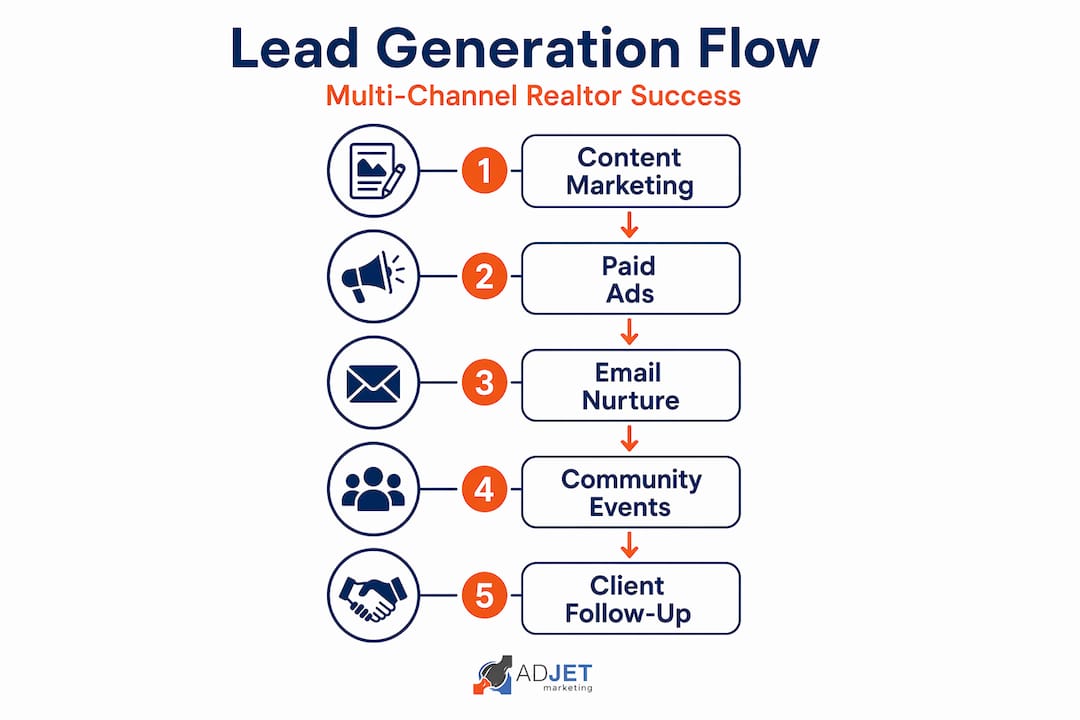
Here is a practical framework for building sustainable visibility:
- Build hyperlocal content consistently. Write neighborhood guides, school district comparisons, and market update videos for the specific areas you serve. Agents who combine hyperlocal content with high-value lead magnets see 30 to 40% of inbound leads come from organic sources, reducing dependence on paid advertising over time.
- Optimize listings for early engagement. The first few days after a listing goes live are critical. Listings with high early engagement are prioritized by search algorithms and buyer alert systems, which compounds visibility without additional ad spend.
- Use AI tools to maintain consistency. Most agents post heavily when business is slow and go quiet when they get busy. AI-powered platforms maintain a consistent presence through autonomous content calendars, which is what algorithms and audiences both reward.
- Run targeted paid campaigns with dedicated landing pages. Generic ads that point to your homepage convert poorly. Pair every paid campaign with a specific landing page offering something of value: a free home valuation, a neighborhood market report, or a first-time buyer checklist.
- Invest in seasonal community engagement. Sponsoring a local event, hosting a homebuyer seminar before spring season, or sending genuinely useful seasonal content creates natural conversation starters. Seasonal community outreach builds authentic trust that compounds over years in ways cold ads never will.
“Investing in community outreach builds authentic, long-term trust and organic referrals far more effectively than cold-calling or paid lead buying.” — NAR Magazine
Multi-channel marketing that integrates in-person efforts with digital content amplification consistently yields stronger visibility and community connection than digital-only approaches. Real estate is still a relationship business. Your marketing should reflect that.
Metrics and tools to track marketing performance
Spending money on real estate advertising services without tracking results is a common and costly mistake. You need to know what is working, what is wasting budget, and where to double down.
The metrics that actually matter:
- Lead-to-appointment rate: How many of your leads convert to a scheduled call or meeting? This tells you whether your lead quality and follow-up system are aligned.
- Cost per qualified lead: Not just cost per lead. A lead from a neighborhood-specific landing page who downloads a market report is far more qualified than someone who clicked an ad out of curiosity.
- Organic traffic growth: Month-over-month website visitors from search engines. This tracks whether your SEO efforts are building long-term momentum.
- Email open and click rates: Low open rates signal that your subject lines or send frequency need adjustment. Low click rates mean the content is not relevant enough to prompt action.
- CRM pipeline health: How many leads are actively in your nurture sequence? How many have gone cold?
| Tool | What it tracks | Best for |
|---|---|---|
| Google Analytics 4 | Website traffic, source, behavior | Organic and paid traffic analysis |
| Google Search Console | Keyword rankings, impressions, clicks | SEO performance monitoring |
| Meta Ads Manager | Ad spend, reach, conversions | Facebook and Instagram campaign data |
| Your CRM (Follow Up Boss, LionDesk, etc.) | Lead status, response time, conversion | Nurturing pipeline management |
Attribution in real estate marketing is genuinely difficult. A client might find you through a Google search, follow you on Instagram for three months, and then call you after receiving a postcard. No single channel gets full credit. The practical solution is to ask every new lead directly: “How did you hear about me?” and log that data consistently. Over time, patterns emerge that tell you which channels are doing the most work.
My honest take on what actually works
I have worked with real estate agents across different markets, and the pattern I see most often is this: agents who struggle with marketing are not struggling because they lack good services. They are struggling because they are inconsistent and impatient.
I have seen agents spend $2,000 a month on lead generation and quit after 60 days because they did not close anything yet. I have also seen agents run a modest $500 Google Ads campaign alongside a steady content schedule and build a pipeline worth six figures within a year. The difference was not the budget. It was the commitment to showing up consistently.
The other thing I want to be direct about is third-party lead providers. Self-generated leads convert better and cost less over time than purchased leads from platforms that sell the same contact to multiple agents. Third-party services have their place in supplementing a pipeline, but if you build your entire strategy on rented leads, you are always one price hike away from losing your pipeline entirely.
My advice is to build owned assets first: your website, your email list, your community relationships. Then layer paid channels on top to accelerate growth. That approach takes longer to show results, but it builds something that belongs to you.
— Felix
How Adjetmarketing helps realtors grow their business
If you are looking for a marketing partner that builds real results rather than just impressions, Adjetmarketing works directly with real estate professionals to develop performance-driven strategies that generate qualified leads. As a Google Partner agency, Adjetmarketing manages Google Ads campaigns specifically designed to reach motivated buyers and sellers in your target market. The team also builds and optimizes agent websites with SEO strategies that grow organic visibility over time, reducing long-term reliance on paid traffic. Whether you need a full digital marketing program or targeted help in one area, Adjetmarketing builds measurable, data-backed marketing systems tailored to your market and goals. Reach out to discuss what that looks like for your business.
FAQ
What are realtor marketing services?
Realtor marketing services are professional tools and strategies used to help agents attract buyers and sellers, generate leads, and grow their business. They include SEO, paid advertising, social media management, email campaigns, and website design.
How much should a realtor spend on marketing?
Most agents invest between 5% and 10% of their gross commission income on marketing. The right amount depends on your market, your growth goals, and whether you prioritize paid or organic channels.
Do third-party lead services work for realtors?
Third-party lead services can supplement your pipeline, but self-generated leads convert at higher rates and lower long-term costs. Use them to fill gaps, not as your primary lead source.
How long does real estate SEO take to produce results?
Real estate SEO typically takes four to six months to show meaningful traffic growth, and six to twelve months to produce consistent leads. It requires patience but builds durable organic visibility that paid ads cannot replace.
What is the most important metric in realtor digital marketing?
Lead-to-appointment conversion rate is the most meaningful metric. It reflects both the quality of your leads and the effectiveness of your follow-up system, which together determine how efficiently your marketing investment turns into closed business.
Recommended
- What Are The Best Lead Magnets For Realtors? | Freebies That Actually Work – AdJet Digital Marketing & Google Partner Agency | SEO Development Google Ads Social
- Real Estate Agent Marketing – AdJet Digital Marketing & Google Partner Agency | SEO Development Google Ads Social
- How To Get High-quality Real Estate Leads Online
- Digital Marketing Strategies That Grow Real Estate Leads