








A marketing success story is a campaign that met a clear business objective through measurable, documented impact. The best ones share a common thread: a specific goal, a channel strategy built around the audience, and results you can point to. Here are the campaigns covered in this article, along with a few headline numbers to set expectations:
- Apple “1984” — one Super Bowl airing, no repeat broadcast, and it became the most discussed ad of its era
- Coca-Cola “Share a Coke” — personalized packaging drove a sales volume increase after more than a decade of declining consumption in Australia
- CeraVe x Kevin Durant — 43% sales lift and 4.1 billion PR impressions from a social-native celebrity play
- Vaseline “Vaseline Verified” — 43% e-commerce sales increase by productizing viral beauty hacks
- PENNY “Sheep Happens” — €30 million in earned media from a real-time response to a rural incident
These are not just inspiring anecdotes. Each one contains a repeatable pattern your team can test.
Table of Contents
- What makes a real marketing success story? Nine case studies examined
- What separates a campaign from a genuine success story?
- What patterns do the best marketing campaigns share?
- How to apply these lessons in the next 90 days
- Key Takeaways
- What these campaigns mean for how we think about marketing
- How Adjetmarketing helps you build your own success story
- Sources and further reading
What makes a real marketing success story? Nine case studies examined
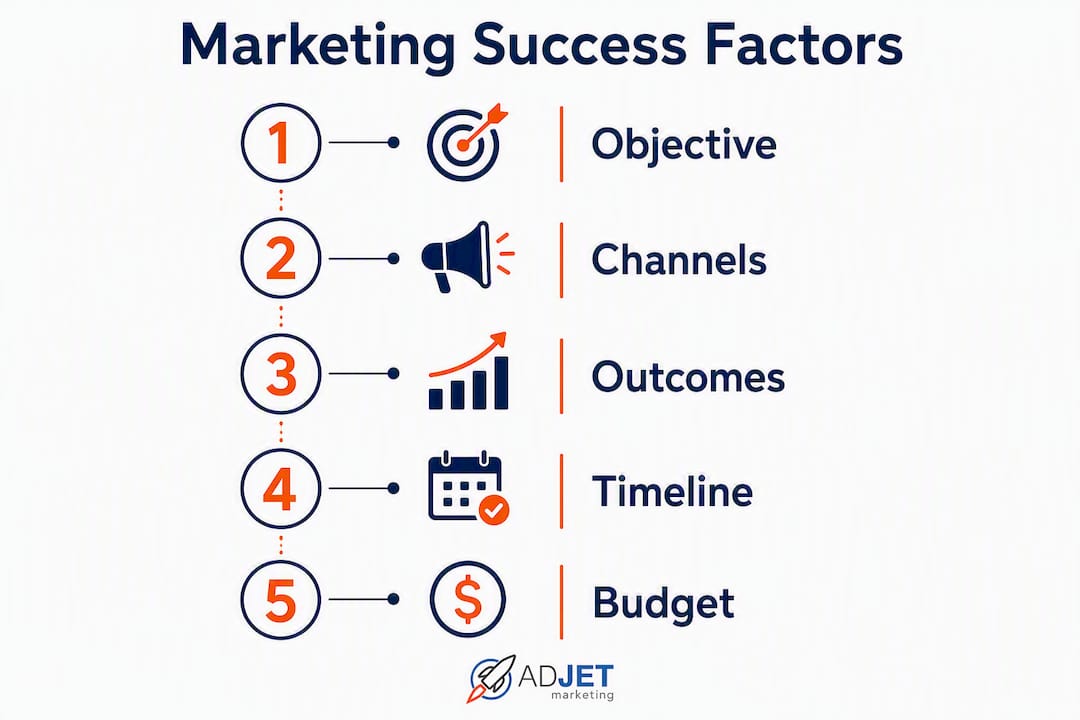
The campaigns below are structured consistently: objective, channels, concrete outcomes, approximate timeline and budget range, why it worked, and one practical takeaway you can act on.

Apple “1984” (1984)
Objective: Product launch awareness for the Macintosh; position Apple against IBM.
Channels: Single Super Bowl broadcast (TV), PR, word of mouth.
Outcomes: The ad aired once during Super Bowl XVIII and generated enough press coverage to run effectively for months without additional media spend. It is widely credited with establishing Apple’s brand identity and driving Macintosh pre-orders.
Timeline/Budget: Produced for approximately $900,000; aired once.
Why it worked: Ridley Scott’s direction created a cinematic event, not a product demo. The “1984” framing gave journalists a ready-made narrative. Apple leaned into the controversy rather than managing it away.
Takeaway: A single, culturally resonant piece of creative can outperform a sustained media schedule if the idea is strong enough to generate its own press cycle.
Coca-Cola “Share a Coke” (2011–2014)
Objective: Reverse declining consumption among young adults; drive purchase frequency.
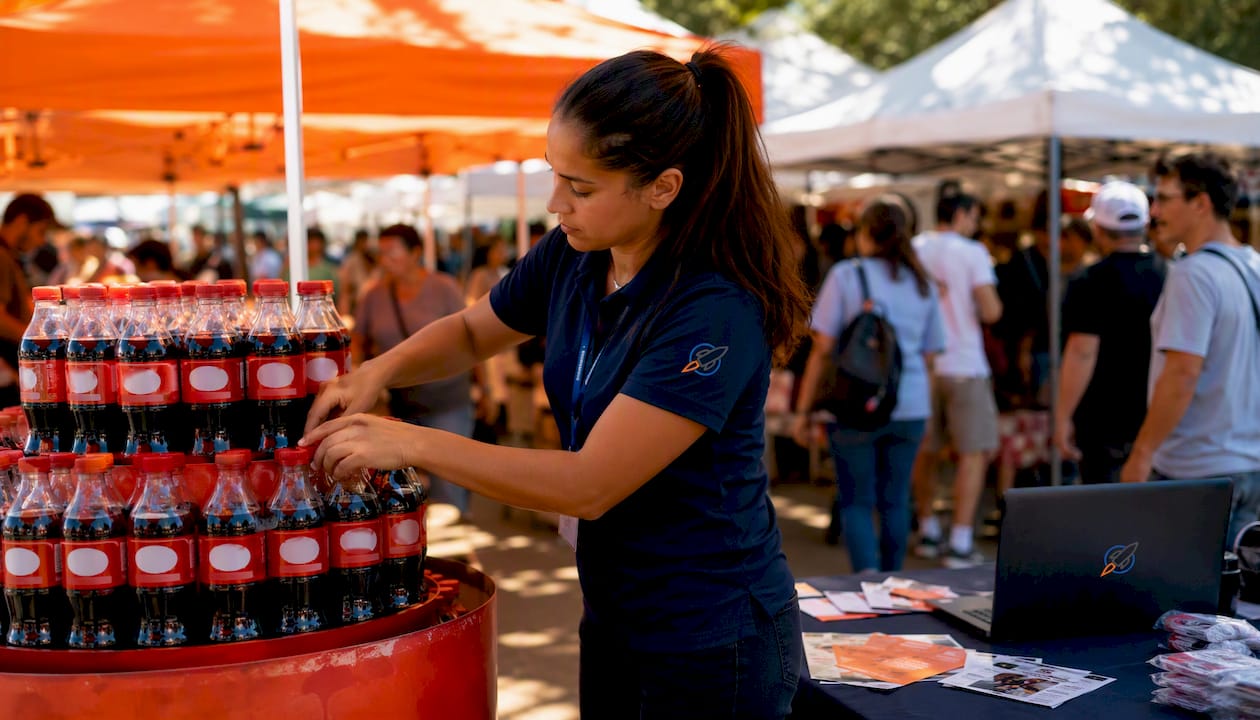
Channels: Packaging redesign, OOH, social media (#ShareACoke), experiential kiosks.
Outcomes: After launching in Australia, the campaign reversed more than a decade of volume decline. It expanded to over 80 countries. In the U.S., Coke reported a measurable uptick in consumption among the 18–24 demographic.
Timeline/Budget: Multi-year rollout; production and media costs scaled with each market expansion.
Why it worked: Personalization at scale. Replacing the Coca-Cola logo with 250 popular names turned a commodity product into a social object. People photographed bottles and shared them, creating earned media the brand did not have to buy.
Takeaway: Personalization does not require a technology platform. A packaging change that makes the product feel personal can generate social sharing without a paid amplification budget.
Nike “Just Do It” (1988–present)
Objective: Broaden Nike’s appeal beyond serious runners; build emotional brand equity.
Channels: TV, print, OOH, athlete partnerships, digital (in later phases).
Outcomes: Nike’s U.S. market share in the athletic shoe category grew from roughly 18% to 43% in the decade following the campaign’s launch. “Just Do It” became one of the most recognized taglines globally.
Timeline/Budget: Long-term brand investment; no single campaign budget applies.
Why it worked: The tagline spoke to aspiration, not product features. It invited everyone, not just elite athletes, into the Nike identity. Athlete partnerships gave it credibility; the simplicity of the line made it portable across every channel and decade.
Takeaway: Brand-level campaigns require patience. The ROI on “Just Do It” compounded over years, not quarters. If you are measuring brand equity work on a 90-day cycle, you are using the wrong ruler.
Dove “Real Beauty” (2004–present)
Objective: Differentiate Dove in a crowded personal care market; build brand loyalty among women who felt excluded by conventional beauty advertising.
Channels: Print, TV, digital, PR, social (in later phases), experiential.
Outcomes: Dove’s sales grew from $2.5 billion to $4 billion in the first ten years of the campaign. The “Real Beauty Sketches” video became one of the most-viewed online ads at the time of its release.
Timeline/Budget: Multi-decade investment; Unilever has not disclosed total spend.
Why it worked: Dove identified a genuine tension its audience felt and took a clear position on it. The campaign was not about soap. It was about how women see themselves, and Dove gave them a reason to feel seen.
Takeaway: The strongest brand campaigns are built on a real consumer truth, not a product benefit. Find the tension your audience lives with and take a credible position on it.
Sephora Beauty Insider (2007–present)
Objective: Drive repeat purchase, increase basket size, and build a defensible loyalty community.
Channels: In-store, email, app, social, experiential events.
Outcomes: Beauty Insider is one of the most cited loyalty programs in U.S. retail, with tens of millions of members. Sephora’s omnichannel approach, connecting in-store behavior to digital profiles, is frequently referenced as a benchmark for retail personalization.
Timeline/Budget: Long-term infrastructure investment; not publicly disclosed.
Why it worked: Sephora treated loyalty as a data engine, not just a discount program. Every purchase, sample, and event interaction fed a profile that made future recommendations more relevant. Members spent more because the experience got better the longer they stayed.
Takeaway: Loyalty programs that collect behavioral data and use it to personalize the next interaction outperform points-only programs. The goal is relevance, not rewards.
Lyft Referral Program (2012–ongoing)
Objective: Acquire new riders and drivers at a lower cost than paid advertising.
Channels: In-app referral mechanics, email, push notifications.
Outcomes: Lyft’s referral program became a primary growth engine in its early years, producing a flywheel where existing users recruited new ones. Referral terms are governed by Lyft’s referral policy, which has evolved as the program scaled.
Timeline/Budget: Built into the product from launch; cost is the referral credit itself.
Why it worked: The incentive was bilateral — both the referrer and the new user received credit. That symmetry removed the awkwardness of asking a friend to sign up for something that only benefits you. The program also had a natural network effect: more drivers meant shorter wait times, which made the referral easier to justify.
Takeaway: Bilateral incentives consistently outperform one-sided referral bonuses. If you are building a referral program, make sure both parties get something meaningful.
JetBlue social customer service (2010s)
Objective: Turn a service channel into a brand differentiator; reduce call center volume.
Channels: X (formerly Twitter), primarily.
Outcomes: JetBlue became one of the most cited examples of real-time social customer service in the airline industry. Response times and tone set a standard that other brands studied. The program reduced escalations and generated positive press coverage without a paid media budget.
Timeline/Budget: Staffing and tooling costs; no media spend required.
Why it worked: JetBlue treated X as a service channel, not a broadcast channel. Agents had the authority to resolve problems in public, which turned individual complaints into visible proof of the brand’s values.
Takeaway: Social customer service is a marketing channel. Every public resolution is a case study in brand trust. Give your team the authority to fix problems without escalation, and the content creates itself.
American Express OPEN Forum (2007–present)
Objective: Build brand equity among small business owners; drive card acquisition through content.
Channels: Content hub (OPEN Forum / Business Class), email, social, events.
Outcomes: OPEN Forum became one of the most referenced examples of B2B content marketing, attracting millions of small business owners who were not yet American Express cardholders. The program positioned Amex as a partner to small businesses, not just a payment processor.
Timeline/Budget: Long-term content investment; not publicly disclosed.
Why it worked: American Express gave away genuinely useful content to an audience it wanted to reach, before asking for anything in return. The content attracted the right people; the brand association did the conversion work over time.
Takeaway: Content marketing works when the content is useful enough to stand alone. If your content only makes sense as a sales pitch, it is not content marketing.
CeraVe x Kevin Durant (2026)
Objective: Drive brand awareness and sales among a younger, social-native audience.
Channels: Social media (X, Instagram, TikTok), earned PR, influencer/celebrity.
Outcomes: 43% sales lift, 4.1 billion PR impressions, and 83 million organic video views. The campaign worked because it matched Durant’s own social voice rather than scripting a traditional endorsement.
Timeline/Budget: Campaign-length; budget not publicly disclosed.
Why it worked: The creative felt native to Durant’s platform behavior. It did not look like an ad. The earned media multiplied the paid investment many times over because journalists and fans treated it as a cultural moment.
Takeaway: When briefing a celebrity or creator, brief them on the platform behavior you want to match, not the product message you want to deliver. Native-feeling content earns coverage; polished ads do not.
Vaseline “Vaseline Verified” (2023–2024)
Objective: Convert viral UGC beauty hacks into a verified product line; capture existing demand.
Channels: TikTok, Instagram, earned PR, e-commerce.
Outcomes: 43% e-commerce sales increase, 63 million interactions, and a 1,293% surge in brand mentions. Positive sentiment held at 87%.
Timeline/Budget: Campaign-length; budget not publicly disclosed.
Why it worked: Vaseline did not try to control the UGC conversation. It joined it, credited the creators, and turned their hacks into products. That crediting move was the key: it made the brand feel like a collaborator rather than a corporation harvesting free content.
Takeaway: When your audience is already creating content about your product, the fastest path to growth is to formalize what they are doing, credit them publicly, and sell the result.
PENNY “Sheep Happens” (2026)
Objective: Turn an unexpected real-world incident into a brand moment; drive local and national awareness.
Channels: Earned media, social, PR, in-store.
Outcomes: €30 million in earned media, a measurable revenue lift at the Burgsinn store directly involved, and revenue growth across PENNY Germany and a significant increase in national brand popularity.
Timeline/Budget: Reactive campaign; low production cost relative to earned media value.
Why it worked: Saint Elmo’s agency and PENNY responded to a real incident (sheep blocking a delivery) with speed and wit rather than a polished campaign brief. The authenticity of the response was the story.
Takeaway: Real-time marketing works when the brand has the internal authority to act quickly. If every response requires three approval layers, you will always be too late.
Summary comparison table
| Brand | Campaign | Goal | Channels | Key Metric | Budget Range | Why It Worked |
|---|---|---|---|---|---|---|
| Apple | “1984” | Launch awareness | TV, PR | Cultural impact; Macintosh pre-orders | ~$900K production | Cinematic event creative; press multiplier |
| Coca-Cola | Share a Coke | Reverse volume decline | Packaging, OOH, social | Reversed decade of decline | Multi-market scale | Personalization at mass scale |
| Nike | Just Do It | Brand equity | TV, print, OOH, athlete | 18% → 43% U.S. market share | Long-term brand spend | Aspirational identity, not features |
| Dove | Real Beauty | Differentiation, loyalty | Print, TV, digital | $2.5B → $4B sales over 10 years | Multi-decade | Consumer truth, not product benefit |
| Sephora | Beauty Insider | Retention, LTV | In-store, email, app | Tens of millions of members | Infrastructure investment | Data-driven personalization loop |
| Lyft | Referral Program | Acquisition | In-app, email | Primary early growth engine | Referral credit cost | Bilateral incentive; network effect |
| JetBlue | Social CS | Brand trust, service | X (Twitter) | Reduced escalations; press coverage | Staffing only | Public resolution as brand proof |
| American Express | OPEN Forum | B2B acquisition | Content hub, email | Millions of SMB readers | Long-term content | Useful content before the ask |
| CeraVe | Kevin Durant | Awareness, sales | Social, PR, influencer | 43% sales lift; 4.1B impressions | Not disclosed | Native-feeling celebrity creative |
| Vaseline | Vaseline Verified | Sales, brand equity | TikTok, Instagram, PR | 43% e-commerce lift; 63M interactions | Not disclosed | Credited creators; productized UGC |
| PENNY | Sheep Happens | Awareness, local and national revenue | Earned media, social, PR | €30M earned media; +13% revenue at Burgsinn; +6% revenue across PENNY Germany; +69% national brand popularity | Low (reactive) | Speed + authenticity; community participation |
What separates a campaign from a genuine success story?
Not every campaign that gets attention qualifies. A genuine success story requires a documented link between the marketing activity and a business outcome. Here is how to think about that by objective.
By objective and primary KPI:
- Awareness: reach, aided/unaided recall lift, share of voice, earned media value
- Acquisition: new customers, cost per acquisition (CAC), conversion rate, referral volume
- Retention: repeat purchase rate, loyalty program enrollment, customer lifetime value (LTV)
- PR/brand equity: sentiment shift, brand popularity scores, press coverage volume
- Product adoption: trial rate, activation rate, feature usage within a defined window
On measurement and attribution:
Last-click attribution is the default in most ad platforms, but it systematically undercounts channels that work earlier in the funnel. When Hexclad added Google Demand Gen as a second channel after Meta CPMs reached $22.40, last-click attribution made the new channel look weak. A geo-holdout incrementality test revealed a 22% new-customer revenue lift that last-click had missed entirely. That gap is common. If you are running more than two channels, you need incrementality testing or media-mix modeling to understand what is actually driving growth. For a practical framework on measuring marketing ROI beyond CPL, LTV and CAC payback periods are the metrics that matter most.
Timeline expectations:
- Leading indicators (thumb-stop rate, click-through rate, cost per landing page view): visible within 7–14 days of launch
- Mid-funnel signals (CAC, conversion rate, referral volume): meaningful data at 30–45 days
- Lagging KPIs (LTV, retention rate, brand recall lift): require 90+ days and often a dedicated measurement study
A campaign that shows strong leading indicators but weak lagging KPIs usually has a landing page or offer problem, not a creative problem. Separate those diagnoses before making budget decisions.
What patterns do the best marketing campaigns share?
Across the eleven cases above, five patterns repeat. These are not abstract principles. Each one has a measurable mechanism.
1. Story-first creative outperforms benefit-first creative
Deux rebuilt its entire creative strategy around founder-led and emotion-first briefs. The result: thumb-stop rate climbed from 19% to 38%, Meta ROAS moved from 1.6x to 3.7x, and CAC dropped from $58 to $34. The mechanism is attention. A story creates a pattern interrupt; a benefit statement confirms what the viewer already suspects. Brief creators on a single emotional truth and measure thumb-stop and hold rates as leading indicators. Those two metrics predict ROAS weeks before the revenue data arrives.
2. A creative library is a living asset, not a production event
Deux scaled from a handful of tested assets to 180+ variations using templatized creator briefs and a structured testing framework. Most brands treat creative production as a quarterly event. The brands that scale treat it as a continuous process with a kill/scale threshold built in. Set a minimum thumb-stop benchmark (industry context suggests 25–30% as a reasonable floor for social video), and pull any asset that falls below it after 500–1,000 impressions.
3. Community participation beats brand control
PENNY’s “Sheep Happens” campaign generated €30 million in earned media because Saint Elmo’s and PENNY responded to a real community moment with speed and wit. Vaseline’s “Vaseline Verified” worked for the same reason: the brand joined a conversation its audience was already having, credited the participants, and formalized the result. Brands that invite participation and accept less control consistently generate deeper engagement than those running tightly scripted campaigns.
Pro Tip: Before briefing a new campaign, search your brand’s hashtags and comments for the conversation your audience is already having. The best campaign brief is often already written by your customers.
4. Channel diversification protects CAC
When Meta CPMs rose sharply, Hexclad added Google Demand Gen as a second acquisition engine. Geo-holdout testing confirmed a 38% reduction in blended CAC. The lesson is not “use Google Demand Gen.” It is: when a single channel’s CPM rises significantly, your CAC will follow unless you have a tested alternative ready. Build your second channel before you need it.
5. Native-feeling celebrity and creator content earns press; polished ads do not
CeraVe’s Kevin Durant campaign generated 4.1 billion PR impressions because the creative matched Durant’s own social voice. The FTC’s guidelines on online advertising disclosures require clear disclosure of paid partnerships, but disclosure does not prevent a piece of content from feeling native. The key is briefing the talent on platform behavior, not scripting their lines.
Agency-tested checklist for applying these patterns:
- Audit your last 90 days of creative: what percentage of assets are story-led vs. benefit-led?
- Set a thumb-stop benchmark and pull any asset below it after 1,000 impressions.
- Build a creator brief template with one emotional truth, one platform behavior to match, and one call to action.
- Run a geo-holdout test on your second-largest channel to confirm its actual contribution.
- Search your brand’s social mentions monthly for UGC trends worth formalizing.
- Set a kill/scale threshold: scale any asset with a thumb-stop rate above your benchmark; kill anything below after a defined impression window.
How to apply these lessons in the next 90 days
You do not need a Super Bowl budget or a celebrity partnership to apply what these campaigns demonstrate. Here is a practical roadmap.
30-day audit and quick wins
- Creative library audit: Count your active ad variations. If you have fewer than 10 tested assets per channel, creative exhaustion is likely already limiting your performance.
- Attribution gap check: Pull your last 30 days of channel data. If two or more channels show overlapping conversion credit, you have an attribution problem worth fixing before scaling spend.
- Landing page conversion audit: Check your primary landing pages against a website design checklist. A page converting below 3–5% on warm traffic usually has a headline or offer problem.
- Audience segmentation review: Are you running the same creative to cold and warm audiences? Separate them. Cold audiences need story-first creative; warm audiences respond to proof and specifics.
Budget context for small businesses: At $3,000–$8,000/month in total media spend, focus on one primary channel and one creative format. Test two to three asset variations per month, not ten.
60-day structured testing and creative scale
- Launch a structured A/B test: one story-first asset vs. one benefit-first asset, same audience, same budget split.
- Build a creator brief template using the pattern from Section 4: one emotional truth, one platform behavior, one CTA.
- Identify your top UGC or organic content from the past six months. Brief one creator to produce a paid version of the best-performing organic format.
- Set your kill/scale threshold in writing before the test starts.
Budget context for mid-market: At $10,000–$30,000/month, you can run parallel tests across two channels. Allocate 70% to your proven channel and 30% to a test channel. Do not move budget until you have 30 days of data.
90-day channel diversification and incrementality testing
- If your primary channel’s CPM has risen more than 20% year-over-year, design a geo-holdout test for a second channel.
- Run the incrementality test for 4–6 weeks with a clean holdout region.
- Use the results to set a permanent budget allocation between channels, not a one-time experiment.
- Review key metrics for your vertical to confirm you are measuring the right lagging KPIs for your business model.
Kill/scale decision template:
- Scale: Thumb-stop rate above benchmark AND CAC at or below target after 30 days
- Hold: Strong thumb-stop but CAC above target — check landing page and offer before cutting
- Kill: Below-benchmark thumb-stop after 1,000 impressions — replace the asset, not the channel
Key Takeaways
The most repeatable marketing success stories share three elements: a documented business objective, a creative strategy built around a specific audience truth, and a measurement framework that separates leading indicators from lagging KPIs.
| Point | Details |
|---|---|
| Story-first creative wins | Deux’s shift to narrative-led briefs moved thumb-stop rate from 19% to 38% and cut CAC from $58 to $34. |
| Channel diversification protects margins | Hexclad’s geo-holdout test confirmed a 38% blended CAC reduction after adding a second paid channel. |
| Community participation scales earned media | PENNY’s real-time response generated €30M in earned media, a 13% revenue lift at the Burgsinn store, a 6% revenue increase across PENNY Germany, and a 69% boost in national brand popularity at a fraction of a traditional campaign’s cost. |
| Attribution gaps hide real performance | Last-click attribution missed Hexclad’s 22% incrementality lift entirely; run geo-holdout tests before cutting channels. |
| Adjetmarketing applies these patterns to clinics and local businesses | Adjetmarketing’s audit-to-retainer model uses the same test-and-learn approach to reduce CAC for medspas, clinics, and home services. |
What these campaigns mean for how we think about marketing
The conventional wisdom in marketing is that big budgets produce big results. The evidence here says otherwise. Apple’s “1984” aired once. PENNY’s “Sheep Happens” was a reactive campaign built around a real incident. Vaseline’s biggest growth driver was content its own customers had already created for free.
What actually separates a marketing success story from a forgettable campaign is not spend. It is the quality of the brief. Specifically: does the brief start with a real human truth, or does it start with a product feature? Every campaign in this article that produced outsized results started with the former.
The pattern I find most underestimated is the creative library as infrastructure. Most marketing teams treat creative production as a cost to minimize. The brands that scale consistently treat it as a compounding asset. Deux’s 180+ tested variations did not happen because they had a bigger budget. They happened because they built a system for producing and testing creative at volume, with clear kill/scale rules. That is a process decision, not a budget decision.
The other thing worth saying directly: measurement is not optional. The Hexclad case is a clean example of a brand that almost cut a channel that was actually working, because last-click attribution was lying to them. If you are making budget decisions based on platform-reported ROAS alone, you are almost certainly misallocating spend somewhere. Build the measurement infrastructure before you scale the media budget.
How Adjetmarketing helps you build your own success story
Most of the clinics, medspas, and home services businesses that come to Adjetmarketing have the same starting point: they have been running ads or doing SEO for months without a clear picture of what is actually driving booked appointments. The problem is rarely the channel. It is the absence of a structured test-and-learn process and a landing page that converts.
Adjetmarketing’s engagement model starts with an audit: creative library health, attribution gaps, landing page conversion quality, and audience segmentation. From there, we move into a pilot phase where we test channel and creative combinations against a defined CAC target, then into a retainer once we have proven winners to scale. For medical practices and aesthetic clinics, you can start with medical practice marketing or explore our Google Ads management for a channel-specific entry point. If you want to understand what a realistic engagement looks like for your practice, reach out for a no-obligation audit conversation.
Sources and further reading
The figures and case details in this article draw from the following sources. Publication dates and a brief note on each source’s contribution are included so you can verify figures and read the full narratives.
- How CeraVe’s Kevin Durant campaign led to a 43% sales lift — Marketing Brew. Primary source for CeraVe sales lift, PR impressions, and organic video view figures.
- How Vaseline Turned Viral Beauty Hacks Into a 43 Percent Sales Surge — Inc. Primary source for Vaseline e-commerce lift, interaction count, and sentiment data.
- Sheep Happens: How a Rural Incident Turned into a Global Cultural Moment — LBBOnline. Source for PENNY earned media value, local and national revenue lifts, and brand popularity increase.
- Lyft Referral Terms — Lyft. Primary source for Lyft’s referral program structure and terms.
- FTC Staff Revises Online Advertising Disclosure Guidelines — FTC. Governing guidance on paid partnership disclosures referenced in the CeraVe and creator sections.
Recommended
- Case Study: Medspa Marketing Strategies That Doubled Revenue – AdJet Digital Marketing & Google Partner Agency | SEO Development Google Ads Social
- Mastering B2B Industrial Marketing: Secrets From Top Agencies – AdJet Digital Marketing & Google Partner Agency | SEO Development Google Ads Social
- Case Studies – AdJet Digital Marketing & Google Partner Agency | SEO Development Google Ads Social
- Maximize Your Franchise Success: Proven Marketing Strategies From Top Agencies – AdJet Digital Marketing & Google Partner Agency | SEO Development Google Ads Social