









A well-optimized clinic website is the single most reliable driver of new patient appointments in a competitive local market. Knowing how to optimize a clinic website means more than fixing broken links or choosing a clean color scheme. It means building a digital presence that loads fast, earns trust, ranks in local search, and converts visitors into booked patients. Clinics with ratings below 4.0 stars can lose up to 60% of online conversions. That number alone shows why website performance and online reputation are inseparable from patient growth. This guide covers every layer, from technical foundations to content strategy, so you can make changes that compound over time.
What are the essential technical foundations for a clinic website?
Speed, security, and mobile readiness are the three non-negotiable technical requirements for any clinic website in 2026. Without them, every other improvement you make loses most of its impact before a patient even reads your first sentence.
Website speed is the most immediate filter. A site that takes over 3 seconds to load loses approximately 40% of its visitors before they see a single word. That is not a bounce rate problem. It is a revenue problem. Compress images, minimize JavaScript, and use a reliable hosting provider with fast server response times.

Mobile design is equally critical. Google’s mobile search recommendations prioritize tap-to-call functionality and prominently visible contact information. Most patients search for clinics on their phones. If your site requires pinching, zooming, or hunting for a phone number, they will leave and call someone else.
Security and compliance protect both patients and your search rankings. HTTPS is a baseline requirement. HIPAA-compliant contact forms with proper data encryption prevent legal exposure and signal trustworthiness to patients who are sharing sensitive health information.
| Technical Factor | Minimum Standard | Why It Matters |
|---|---|---|
| Page load speed | Under 3 seconds | Retains 40% more visitors |
| Mobile responsiveness | Google Mobile Guidelines | Supports tap-to-call and form completion |
| HTTPS and secure forms | SSL certificate + HIPAA-compliant forms | Protects patient data and builds trust |
| Google Business Profile alignment | Exact NAP match | Prevents local SEO ranking penalties |
Pro Tip: Run your site through Google PageSpeed Insights monthly. It flags specific issues, not just a score, so you know exactly what to fix.
Consistency between your website and Google Business Profile for phone numbers, hours, and services is critical. Discrepancies confuse search algorithms and trigger ranking penalties. Audit both your site and your Google Business Profile every quarter to keep them in sync.
How to craft website content that converts patients
Content that converts patients is written from the patient’s perspective, not the provider’s. Most clinic websites describe services using clinical terminology that means nothing to someone searching for help with back pain or anxiety. That gap between how clinics describe their work and how patients think about their needs is where most conversion opportunities are lost.
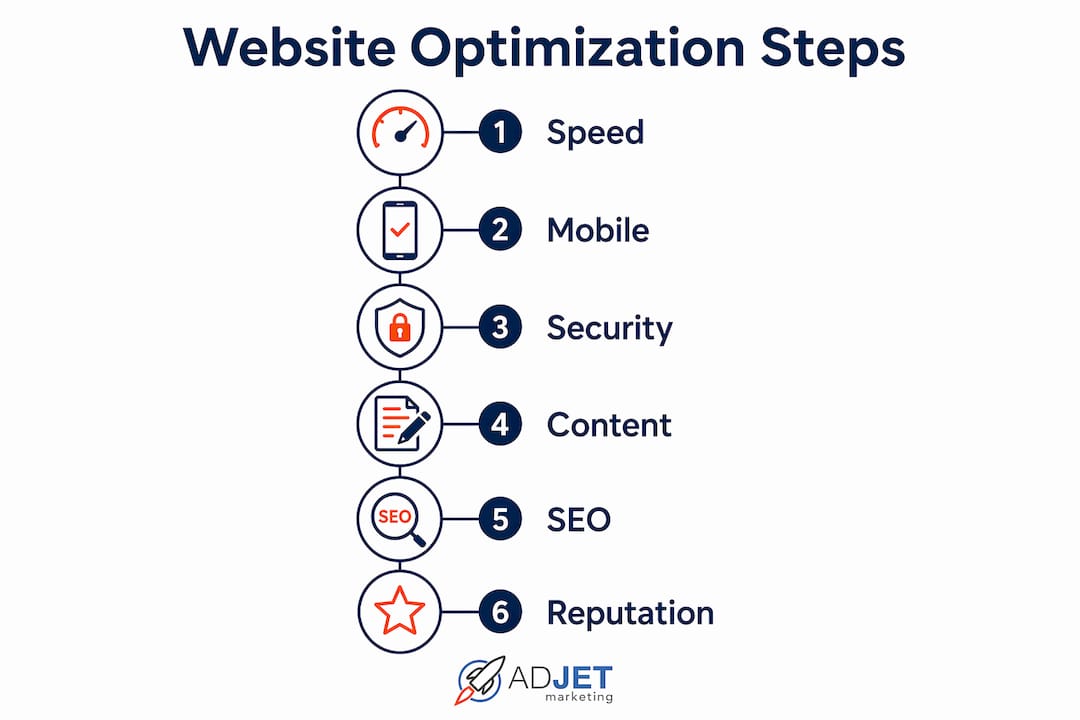
Service pages written in patient-friendly language that focus on benefits and what to expect reduce inquiry friction and lower appointment anxiety. Instead of “interventional pain management procedures,” write “treatments that reduce chronic pain so you can get back to daily life.” That shift in framing answers the patient’s real question before they have to ask it.
Trust signals matter just as much as the words you choose. Include these on every service page and your homepage:
- Provider bios with photos and credentials: Patients want to know who will treat them. A real photo and a short, human biography reduce the fear of the unknown.
- Online reviews and star ratings: Display Google reviews directly on your site. Actively request reviews after appointments to maintain a rating above 4.0 stars.
- Before-and-after results or case summaries: Where HIPAA-compliant, these give prospective patients a realistic picture of outcomes.
- FAQs on every service page: Answer the five questions patients ask most often before booking. This reduces pre-appointment phone calls and improves SEO simultaneously.
Pro Tip: Add a short “What to expect at your first visit” section to every service page. It is one of the highest-converting content additions we see across clinic websites, because it removes the single biggest barrier to booking: fear of the unknown.
Blog content compounds your SEO authority over time. Publishing answers to common patient questions, such as “How long does a cortisone injection last?” or “What is the difference between a psychiatrist and a therapist?”, builds topical relevance that Google rewards with higher rankings. For therapist websites specifically, therapist website design that balances warmth with clinical credibility tends to outperform generic healthcare templates.
Which user experience practices maximize patient bookings?
The path from landing on your site to booking an appointment should require as few steps as possible. Every extra click, every confusing menu, and every form that does not work on a phone is a patient you did not book.
More than 60% of patients prefer making appointments online. That means self-booking is not a convenience feature. It is a core conversion tool. If your booking system is buried in a submenu or requires patients to create an account before scheduling, you are losing a significant share of that majority.
Follow these steps to reduce booking friction:
- Place contact information in the header and footer of every page. Phone number, address, and hours should never require scrolling or searching.
- Add a prominent “Book Appointment” button in the top navigation and at the bottom of every service page. Use a contrasting color so it stands out without being aggressive.
- Test your booking workflow on a phone with one hand. If you cannot complete the process comfortably in under two minutes, your patients cannot either.
- Simplify your forms. Ask only for name, phone number, preferred date, and reason for visit. Every additional field reduces completion rates.
- Audit third-party scripts quarterly. Scheduling widgets, chat plugins, and marketing pixels accumulate over time and degrade page speed. Remove anything you are not actively using.
Pro Tip: Handling anxious patients starts before they arrive. Clear, reassuring website content reduces the volume of pre-visit calls your front desk receives. Pairing that with effective telephone reception for patients who do call creates a consistent, calming experience across every touchpoint.
Regular audits of scheduling widgets and marketing scripts are necessary to avoid the kind of invisible performance decay that accumulates silently. A site that loaded in 2.1 seconds when it launched can creep past 4 seconds within 18 months simply from added plugins and unoptimized media.
How to leverage local SEO and online reputation to boost clinic visibility
Local SEO is the mechanism that puts your clinic in front of patients who are actively searching for your services in your area. It is not optional. It is the difference between appearing in the Google Maps pack and being invisible to the majority of local searchers.
NAP consistency, which stands for name, address, and phone number, is the foundation. Every online directory, from Yelp to Healthgrades to your local chamber of commerce listing, must show the exact same information as your website and Google Business Profile. Even minor differences, like “St.” versus “Street,” can confuse search engine signals and suppress your local rankings.
Your Google Business Profile deserves the same attention as your website. Keep it updated with:
- Accurate service categories and descriptions
- Current hours, including holiday hours
- Recent photos of your clinic interior, staff, and equipment
- Responses to every review, positive and negative
Backlinks build domain authority that search engines use as a credibility signal. Most clinics focus entirely on content and technical SEO while ignoring backlinks. A single mention from a local hospital, a medical association, or a well-trafficked health publication carries more ranking weight than dozens of blog posts. Pursue these relationships deliberately.
Online reputation directly affects conversion. Clinics with ratings below 4.0 stars see measurable drops in patient inquiries. Treat your review profile as a clinical metric, not a vanity number. For a deeper look at how medical SEO drives patient leads, the mechanics of local authority building are worth understanding in detail.
What are common mistakes that hurt clinic website performance?
Most clinic websites do not fail because of one catastrophic error. They degrade gradually through neglect, accumulated technical debt, and content that goes stale. Recognizing these patterns early saves significant recovery time.
The most expensive clinic website problem is the one you cannot see. Outdated scripts, mismatched business profiles, and a creeping load time do not trigger error messages. They just quietly reduce the number of patients who book.
Watch for these specific failure points:
- Mismatched Google Business Profile data: A phone number that changed six months ago but was never updated on Google can suppress your entire local ranking. Check this monthly.
- Slow load times from accumulated plugins: Every WordPress plugin and third-party widget adds HTTP requests. Audit your active plugins twice a year and remove anything redundant.
- Broken or outdated booking flows: A scheduling widget that no longer connects to your calendar sends patients to voicemail instead of a confirmed appointment. Test your booking process from a patient’s perspective every month.
- Ratings slipping below 4.0 stars: A 60% drop in conversions is the documented consequence. Set up Google alerts for your clinic name and respond to negative reviews within 24 hours.
- Outdated service pages: A page that still lists a provider who left two years ago, or a service you no longer offer, creates confusion and erodes trust.
The clinics that maintain strong online performance treat their websites the way they treat clinical equipment: scheduled maintenance, regular calibration, and immediate attention when something is off.
Key Takeaways
A clinic website that loads fast, earns strong reviews, and aligns with Google Business Profile data is the most reliable foundation for consistent patient growth.
| Point | Details |
|---|---|
| Speed is a conversion threshold | Sites loading over 3 seconds lose approximately 40% of visitors before engagement begins. |
| Patient-centered content reduces friction | Service pages written in plain language lower anxiety and increase appointment inquiries. |
| NAP consistency protects local rankings | Exact name, address, and phone match across all directories prevents search engine penalties. |
| Reviews above 4.0 stars protect revenue | Ratings below 4.0 stars can reduce online conversions by up to 60%. |
| Regular audits prevent silent decay | Quarterly reviews of scripts, plugins, and profile data stop gradual performance loss. |
What I have learned from working with clinic websites
After working with medical clinics, pain practices, and mental health providers across different markets, one pattern stands out clearly. The clinics that grow fastest are not the ones with the most sophisticated websites. They are the ones that treat their website as a living system, not a one-time project.
The most common situation we see at Adjetmarketing is a clinic owner who invested in a well-designed site two or three years ago, then left it untouched. By the time they come to us, the site is technically sound on the surface but bleeding patients through slow load times, a mismatched Google Business Profile, and a booking flow that stopped working properly after a plugin update. The fix is rarely dramatic. It is methodical.
One thing I want to push back on is the idea that paid ads and SEO are competing strategies. They are not. Paid ads through Google Ads give you immediate visibility while your organic SEO compounds over months. The clinics that treat SEO versus paid advertising as an either-or decision consistently underperform compared to those running both in parallel. SEO builds the foundation. Paid ads accelerate the timeline.
Realistic expectations matter here. Local SEO improvements typically take three to six months to show meaningful ranking movement. Reputation recovery after a string of negative reviews takes longer. But the compounding effect is real. A clinic that commits to consistent content updates, quarterly technical audits, and active review management for 12 months will be in a structurally stronger position than a clinic spending the same budget on ads alone.
The other thing most articles do not say: your website is also a patient experience tool, not just a marketing tool. Clear pre-visit information, easy scheduling, and transparent provider bios reduce the administrative burden on your front desk. That is a measurable operational benefit, not just a marketing outcome.
— Felix
How Adjetmarketing supports clinic website growth
Adjetmarketing works exclusively with medical clinics, aesthetic practices, mental health providers, and private healthcare businesses. The agency’s approach combines digital marketing strategy development with technical website performance, local SEO, and Google Ads management built specifically for healthcare providers. Every engagement starts with a clear audit of where your current site is losing patients and what changes will produce the fastest measurable improvement. If you are ready to build a website that consistently converts visitors into booked appointments, Adjetmarketing’s team is available for a direct consultation. The goal is always the same: more patients, less wasted budget, and a website that works as hard as your clinical staff.
FAQ
How long does it take to see results from clinic website optimization?
Local SEO improvements typically show meaningful ranking movement within three to six months. Technical fixes like speed and mobile responsiveness can improve conversion rates within weeks.
What is the minimum star rating a clinic needs to maintain online conversions?
Clinics should maintain a rating above 4.0 stars. Ratings below 4.0 are associated with up to a 60% drop in online conversion rates.
How does Google Business Profile affect clinic website rankings?
Discrepancies between your website and Google Business Profile, such as different phone numbers or hours, trigger local SEO penalties that suppress your rankings in local search results.
What is the most important page to optimize on a clinic website?
Service pages are the highest-priority optimization target. Patient-centered service content that explains benefits and sets clear expectations reduces friction and increases appointment inquiries directly.
How often should a clinic audit its website?
A full technical audit, including plugin review, speed testing, and Google Business Profile alignment, should happen at least quarterly. Booking flow testing should happen monthly.