









Local Services Ads (LSAs) usually fit contractors who want trust-driven phone calls at a pay-per-lead price, while PPC fits those who want keyword control and room to scale. LSAs depend on business verification and the Google Guaranteed badge. PPC needs active management so spend does not leak. We recommend testing LSAs quickly and running targeted PPC for niche, high-value searches.
TL;DR:
- Compare booked job costs: divide LSA lead cost by its booking rate, and PPC click cost by click to lead and booking rates.
- Set up call tracking and CRM tags before launch, then record every lead as booked, quoted, lost, or invalid to compare channels fairly.
- Review LSA leads daily and dispute irrelevant, out of area, spam, or vendor contacts within Google’s window; approved disputes return account credit.
- For niche, high value jobs, build separate PPC ad groups and matching landing pages, then review search terms weekly and add negative keywords.
Table of Contents
- How do LSAs and PPC compare side by side?
- How do you compare costs between LSA and PPC?
- How do you measure lead quality and dispute bad LSA leads?
- Where does PPC give you more control?
- Which channel should you test first?
- What do we see work for U.S. contractors?
- Test both channels, then let the numbers decide
- How can we help you test and scale LSA and PPC?
- FAQ
- Sources
How do LSAs and PPC compare side by side?
The core difference is what you pay for. LSAs charge per lead, meaning a call, message or appointment request. PPC charges per click, so you pay for traffic whether or not a visitor ever contacts you.
Placement and trust signals differ too. LSAs sit at the top of the results page and carry the Google Guaranteed badge, along with your reviews and ratings. PPC ads look like standard search ads, so your landing page and ad copy have to build the trust that the badge builds automatically for LSAs.
Here is how the two stack up for a contractor:
- Billing: LSAs charge per valid lead; PPC charges per click.
- Setup: LSAs require screening and verification, then Google automates most keyword matching. PPC requires you to build campaigns, keywords and ad copy.
- Control: LSAs offer limited customization. PPC lets you control keywords, ad copy, landing pages, bids, schedules and geography.
- Typical lead action: LSA leads arrive as calls, messages or booking requests. PPC leads usually come from a website visit that turns into a form fill or a tracked call.
- Lead quality oversight: LSAs need active dispute management. PPC needs ongoing pruning of search terms and negative keywords.
How do you compare costs between LSA and PPC?
Raw prices will mislead you if you compare them directly. LSA lead prices vary by location, job type and lead type, such as phone call versus message. PPC click costs swing with competition, and they stay efficient only when someone keeps pruning negative keywords, testing landing pages and adjusting bids. We call that the management tax, and Google’s own documentation on Search campaign upkeep points the same way: it is ongoing work, not a one-time setup.
To compare channels fairly, convert everything into cost per booked job:
- For LSAs: cost per lead ÷ lead-to-job rate.
- For PPC: cost per click ÷ click-to-lead rate ÷ lead-to-job rate.
Here is a checklist for setting a test budget:
- Pick a budget you can sustain for the full test window, not a burst that ends before the data settles.
- Set up call tracking and CRM tagging before spending a dollar.
- Watch click-through rate and early lead quality during the test.
- Log every lead’s outcome: booked, quoted, lost or invalid.
- Compare cost per booked job, not cost per lead, before moving budget.
Pro Tip: Many contractors come to us after judging a channel on cost per lead alone. A cheap lead that never books costs more than an expensive one that does.
LSAs bill per lead, PPC bills per click: the same budget buys very different units, so compare them only at the cost per booked job. (Google Local Services Help)
How do you measure lead quality and dispute bad LSA leads?
LSAs can deliver irrelevant contacts: wrong service, outside your area, spam or a vendor pitch. Automated filters catch some of it, but legitimate-looking bad leads need manual flagging within Google’s dispute window, and credited leads come back as account credit. Many contractors never dispute anything simply because nobody checks the lead inbox.
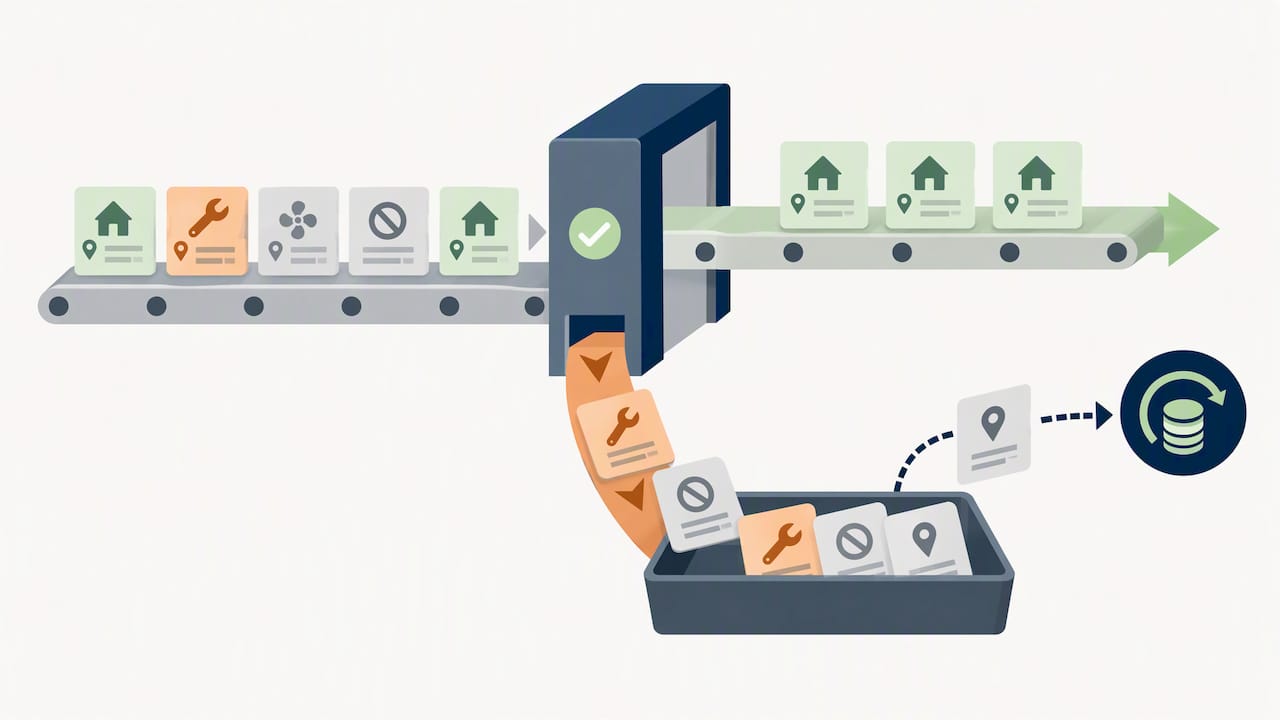
Tracking is what makes the comparison honest. Set up a CRM and call-tracking tool, such as CallRail or CallTrackingMetrics, so each lead is tagged to its source. Search Engine Land’s comparison of LSAs and Search ads notes that many advertisers run both channels and reallocate budget based on which delivers better long-term results, which is only possible with clean attribution.
Track these metrics for each channel:
- Charged leads versus credited or invalid leads
- Lead-to-booked-job rate
- Cost per booked job
- Average time from lead to booked appointment
Pro Tip: Review the lead inbox daily and run disputes weekly. Write down a simple workflow: listen to the call, mark the reason, file the dispute, log the outcome.
Where does PPC give you more control?
PPC is the channel where optimization work compounds. You choose match types, add negative keywords to block bad searches, test ad copy against itself, set bidding strategies, schedule ads around your call-handling hours and target specific service areas. LSAs automate most of this, which keeps them simple but limits what you can improve.
PPC can give you more control over targeting, so you can tailor campaigns to your services and service areas. LSAs offer nothing similar.
Landing pages matter more here than anywhere else. A PPC click lands on your page, so a tight match between the search, the ad and the page decides whether the click becomes a lead. LSA leads skip your page entirely and start with a call or message, so your phone handling and reviews carry that weight instead.
A basic order of operations to reduce wasted spend:
- Build one ad group per service, such as roof repair or panel upgrades, instead of one catch-all group.
- Start with phrase and exact match keywords, and add negatives from day one.
- Send each ad group to a landing page written for that exact service.
- Add call tracking and form tracking before launch.
- Review search terms weekly and prune what wastes budget.
For deeper campaign structure, our guide on PPC strategies for service businesses applies directly to contractor ad groups.
Which channel should you test first?
Your situation points to a starting plan:
- Small budget and you need calls now: start with LSAs. They are simpler to launch, and LSAs often have a lower cost per lead in many local markets, though they tend to work best in smaller or less competitive markets.
- Niche, high-value jobs: invest in PPC, where higher-intent or specialized keywords reward custom targeting.
- You want full coverage: run both in parallel with separate tracking.
A test needs four things written down before launch: a budget split, a tracking plan, a lead-to-job measurement, and decision thresholds for shifting money.
Reviews and phone handling deserve attention first. LSAs depend on verification and review volume, and a missed call is a paid lead lost. Google’s LSA requirements also apply to anyone managing your account.
Pro Tip: Answer LSA calls within a few rings, every time, and ask each happy customer for a review before you leave the job site.
What do we see work for U.S. contractors?
Across the contractors we talk to, the pattern is consistent: most underestimate the operational work. Missed calls, slow callbacks and thin review profiles quietly cost more than any bid adjustment.
We run LSA and PPC tests in parallel, tag every lead to its source, and decide on scale based on cost per booked job, not clicks or lead counts. Budget moves only after the data supports it.
- Check the lead inbox every day.
- Use a scripted phone intake so every caller gets the same questions.
- Set a monthly review goal to strengthen your LSA ranking.
Test both channels, then let the numbers decide
Felix here. I would not pick a winner before testing, because markets differ and so do shops. Run both channels with real tracking, put your phone script and review collection ahead of ad tweaks, and judge everything by cost per booked job. In my experience, a better landing page or a faster callback moves results more than any small ad edit. Short-term leads pay the bills, but the operations behind them are what let you scale.
— Felix
How can we help you test and scale LSA and PPC?
Our team runs the comparison for you, so you are not guessing which channel earns its budget. We start with an audit, run a parallel test, and scale based on cost per booked job.
- Google Ads management for campaign setup and ongoing optimization
- Landing page design built to turn clicks into booked jobs
- Conversion optimization and call and lead tracking integration
Book a low-friction audit or discovery call, and we will show you where your current spend stands and what a clean test would look like.
FAQ
Is PPC still worth it for contractors?
Yes, when it is managed actively. PPC offers keyword, ad copy and landing page control that LSAs do not, but it rewards ongoing optimization and can waste budget when left on autopilot.
Which is better for contractors, LSA or PPC?
Neither wins everywhere. LSAs tend to suit smaller budgets and faster calls, while PPC suits niche jobs and scaling, so many contractors run both and compare cost per booked job.
What does LSA mean for a contractor?
LSA stands for Local Services Ads, Google’s pay-per-lead format that shows a Google Guaranteed badge, reviews and ratings. You pay for qualifying calls, messages or bookings instead of clicks.
What is the difference between CPC and PPC?
PPC is the advertising model where you pay when someone clicks. CPC, or cost per click, is the price you pay for each of those clicks.