









A healthcare PPC strategy is a plan for how your practice pays for search ads, which patient searches you target, where those clicks land, and how you measure booked appointments without exposing protected health information (PHI). Most clinics that struggle with Google Ads don’t have a bidding problem. They have a structure, landing page or tracking problem that no bid change fixes.
This guide walks through the plan we use when we advise clinic owners: how to start from the outcome, structure campaigns, handle HIPAA and Google’s health policies, set realistic budgets and timelines, and decide when PPC should share the stage with SEO.
TL;DR
- Start with the appointment you want to book, then work backward to keywords, ads and landing pages.
- Separate campaigns by service and by intent. One “everything” campaign hides which treatments actually bring patients.
- Treat tracking as a compliance decision. Federal regulators have warned healthcare providers about online tracking technologies, so decide what data reaches ad platforms before you launch.
- Expect a learning period. Plan for several months of data before you judge profitability, and never budget on a promised result.
- PPC buys speed, SEO builds a durable asset. Most clinics do best running both, in a sequence that fits their cash flow.
Table of Contents
- What a healthcare PPC strategy actually includes
- Start with the outcome, not the keyword list
- Separate intent before you separate budgets
- Build the campaign structure around services and locations
- Write ads that are specific and calm
- Know Google’s healthcare rules before you launch
- Treat tracking as a compliance decision
- The landing page decides whether clicks become patients
- Budgets, timelines and honest expectations
- PPC versus SEO: a balanced view
- Our perspective
- How AdJet can help
- Common mistakes to avoid
- FAQ
- Sources
What a healthcare PPC strategy actually includes
Pay-per-click advertising means you pay when someone clicks your ad. In healthcare, the ad usually appears on Google Search when a person types something like “knee pain specialist near me” or “med spa Dallas.” That person has a need and is comparing providers right now, which is why search ads tend to be the first paid channel clinics try. For a plain-language primer, see our explainer on healthcare PPC for clinic marketers.
A complete strategy covers six decisions:
- Goal. A booked consultation, a new-patient call, or a form submission for a specific service.
- Audience and intent. Who is searching, and how close are they to booking?
- Campaign structure. How services, locations and match types are organized.
- Ads and landing pages. What patients see before and after the click.
- Measurement. Which actions count, and how you track them without leaking PHI.
- Budget and review rhythm. How much you spend, and when you decide to scale, fix or stop.
The order matters. Many clinics come to us after a poor-lead experience where decision five was never made. The account was optimized for clicks or form fills, and nobody checked whether those forms turned into patients.
Start with the outcome, not the keyword list
Before opening Google Ads, write down three numbers:
- Value of a new patient. For an aesthetic practice, this might be the first treatment plus expected repeat visits. For a pain clinic, it might be a consultation that leads to a treatment plan. Use your own figures.
- Capacity. How many new patients can your team see each week without hurting care?
- Close rate. Of the people who call or submit a form, how many actually book?
These three numbers tell you what a lead is worth and how much you can afford to pay for one. A clinic that books half of its calls can pay more per click than one that books one in five. Without these figures, a cost-per-lead report is just a number.
A worked example, with made-up numbers for illustration only: if you can afford to pay $150 for a booked new patient and you book 30% of leads, you can pay up to $45 per lead. If your account is running at $90 per lead, the answer is probably not a higher budget. It is a tighter keyword set, a better landing page, or faster phone follow-up.
Separate intent before you separate budgets
Not every healthcare search comes from a future patient. Searches fall into rough groups:
| Intent | Example search | How to treat it |
|---|---|---|
| Ready to book | “botox near me,” “pain management doctor accepting new patients” | Highest priority. Dedicated campaign, strong call and form options. |
| Comparing options | “best med spa in [city],” “PRP vs cortisone injection” | Good for landing pages with proof, FAQs and clear next steps. |
| Researching a condition | “what causes chronic back pain” | Usually better served by SEO content. Paid clicks here are often expensive and low in intent. |
| Not a patient | Job seekers, students, product shoppers | Exclude with negative keywords. |
Most of your early budget belongs in the first two rows. The third row is where clinics often waste money, because broad terms sound relevant but rarely lead to a booked appointment within the same session.
Build the campaign structure around services and locations
A structure that works for most single-location practices:
- One campaign per core service line. For example, injectables, laser treatments and body contouring for a med spa. Or interventional pain, physical medicine and consultations for a pain clinic.
- Tightly themed ad groups. Each group targets one treatment or condition, so the ad and the landing page match the search.
- Location targeting that mirrors where patients live. Use a radius or a list of cities and zip codes you actually serve, and review the location report regularly.
- Negative keywords from day one. Add terms such as “jobs,” “salary,” “training,” “free” and “DIY,” then expand from the search terms report.
- Call and form conversions tracked separately. Many clinics get most of their bookings by phone, so a form-only view understates results.
Why we keep campaigns narrow: Google’s system learns from the conversions each campaign produces. If one campaign mixes a high-value surgical consult with a low-value skin treatment, the budget drifts toward whichever generates the cheapest conversions, not the most valuable patients. Separate campaigns let you assign budgets by value.
For tactical optimization once you are live, our guides on optimizing Google Ads for medical clinics and 20 tips to optimize Google Ads for healthcare go deeper on bids, extensions and search-term reviews.
Write ads that are specific and calm
Patient-facing ads work best when they answer the question the person typed and nothing more. A few principles:
- Name the service and the place. “Knee Injections in Plano” beats a generic brand line.
- State what happens next. “Book a consultation online or call today” removes uncertainty.
- Avoid fear and pressure. Patients searching about pain, anxiety or appearance are often already stressed. Plain language builds more trust than urgency.
- Avoid outcome promises. Claims about results can conflict with ad policies and medical advertising expectations, and they set expectations your clinical team cannot guarantee.
- Use every relevant extension. Call, location and sitelink assets give patients more ways to act.
Know Google’s healthcare rules before you launch
Google applies a healthcare and medicines policy with categories that range from prescription drug services to addiction services and fertility. Some categories require certification or are restricted by location. If you run a telemedicine practice, an addiction treatment program or a clinic offering prescription-related services, check the policy for your category and your state before you build campaigns. Our guide on telemedicine marketing covers the marketing side of that situation.
Another pattern we see: owners panic when an ad shows a limited-eligibility status related to health in personalized advertising. In the Google Ads Community, advertisers report that wording which merely implies a health condition, such as terms like “sensitive” or “skin barrier,” can trigger the flag. Often the fix is editing ad copy and landing page language to describe the service plainly. If ads are still serving, review the status before making sweeping changes, and contact Google support if you can’t tell what triggered it.
Treat tracking as a compliance decision
This is where healthcare PPC differs most from PPC for a plumber or a retailer.
In July 2023, the FTC and HHS’s Office for Civil Rights sent a joint warning to hospital systems and telehealth providers about the privacy and security risks of online tracking technologies. HHS also published guidance on online tracking technologies for HIPAA covered entities and business associates.
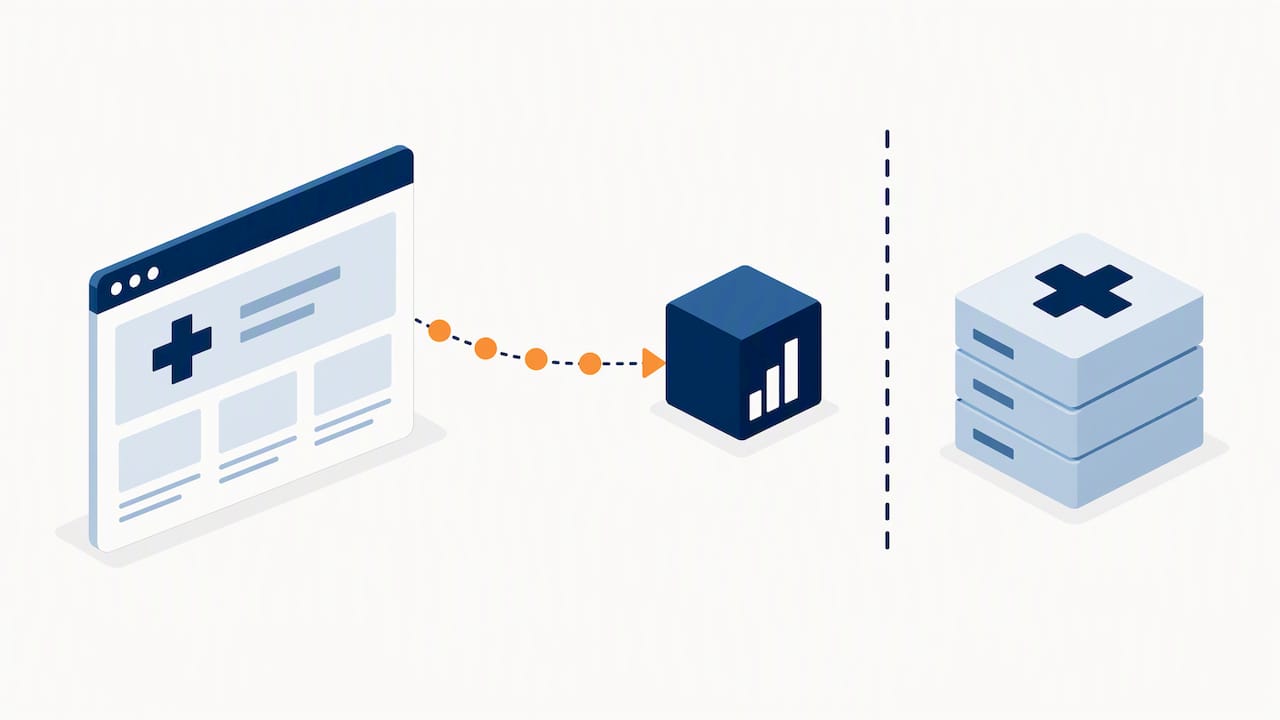
The legal picture has shifted since. In June 2024, a federal court ruling in American Hospital Association v. Becerra, summarized by Holland & Knight, narrowed the OCR bulletin for third-party tracking on unauthenticated public webpages. The same summary notes that the decision does not immediately end the class actions already brought over pixel and cookie use. In other words, the risk did not disappear.
The FTC has also acted outside HIPAA. Its complaint against Monument, a telehealth alcohol-treatment company, centers on allegations that users’ health information was shared with advertising platforms such as Meta and Google through tracking technologies, despite privacy promises. If you handle health data, FTC rules can matter even where HIPAA does not apply.
What this means in practice:
- Decide what counts as a conversion. A “thank you” page URL that reveals a condition or treatment can itself be sensitive information.
- Keep patient-identifiable data away from ad platforms. Don’t pass names, emails, appointment details or condition-specific parameters into pixels.
- Review every tag on every page. Patient portals, scheduling pages and symptom checkers deserve the most scrutiny.
- Consider server-side or consent-aware setups. They give you more control over what leaves your site.
- Ask your privacy officer or healthcare attorney. We can design measurement around your requirements, but your counsel decides what your organization is permitted to share.
The calm version of this: you can run accurate PPC and protect patient privacy. It takes a deliberate tracking plan instead of default settings.
The landing page decides whether clicks become patients
Once a patient clicks, your ad is done. The page has to finish the job. A landing page for paid healthcare traffic should include:
- A headline that repeats the service the patient searched for
- One primary action, such as booking online or calling
- Provider credentials, location and hours near the top
- Plain explanations of what the first visit involves
- Reviews or other proof you are permitted to display
- Fast load time on mobile, where many local searches happen
- A short form that asks only for what you need to follow up
Sending paid traffic to a homepage is among the most common reasons for weak results. A homepage speaks to everyone, so it persuades few. Read more in our piece on the role of landing pages in healthcare marketing, and see how to design high-converting landing pages for layout details.
Phone handling is part of the same conversion path. Clinics often spend months tuning ads while calls go to voicemail after 5 p.m. Check who answers, how fast, and what they say. A missed call from a paid click is the most expensive lead you will ever lose.
Budgets, timelines and honest expectations
We don’t promise a cost per lead, and you should be wary of anyone who does. Cost depends on your specialty, your city, competition and the quality of your landing page.
A reasonable way to plan:
- Months one to two: setup and learning. Conversion tracking, structure and negative keywords go in. Early data is noisy, and search terms reports will show where the targeting is too broad.
- Months two to four: refinement. Pause weak terms, rewrite ads, test landing page variations, and check that leads are real patients.
- Month four onward: scale or fix. If booked-patient cost is under your ceiling, raise the budget gradually. If not, look at the page, phone handling and offer before spending more.
Set a testing budget you can afford to spend without reading results too early. A budget that is too small to generate enough clicks can’t teach you much, and cutting a campaign after two weeks usually tells you only that two weeks wasn’t enough.
You should also budget for the work around the ads: landing pages, reporting and tracking. For our own page-building options, pricing is published on our landing page design page: the Starter Plan is $299 per month, the Premium Plan is $1,500 per month, and a single landing page is $2,000 one-off.
PPC versus SEO: a balanced view
Clinics often ask which to choose. The honest answer is that they do different jobs.
| PPC | SEO | |
|---|---|---|
| Speed | Can start generating inquiries once campaigns are live | Typically builds over months |
| Cost behavior | You pay for every click; traffic stops when spend stops | Upfront and ongoing effort; traffic can continue after work slows |
| Control | High: you choose keywords, budgets and messages | Lower: rankings depend on search engines |
| Best for | New services, new locations, capturing ready-to-book searches | Long-term visibility, condition and treatment education |
| Main risk | Rising click costs, policy restrictions | Slow payoff, algorithm changes |
A practical sequence for many practices: launch PPC on one or two high-value services to get patients booking, then invest in SEO and content so that over time you depend less on paid clicks. If you run a med spa, our comparison of Google Ads versus Meta Ads for medspas shows how search and social fit together.
Our perspective
We work with medical clinics, aesthetic practices, pain management clinics and mental health providers, and the same pattern repeats. Clinics rarely fail at PPC because Google Ads doesn’t work. They fail because ads, pages, phones and tracking were set up by different people who never compared notes.
We prefer to begin with the patient’s path: the search, the ad, the page, the call, the booking. Then we build measurement around it, with privacy limits decided up front. We would rather launch two well-built campaigns than ten thin ones, and we would rather tell you a keyword group is not worth the money than keep spending on it.
We also avoid guarantees. Healthcare marketing depends on your specialty, your market and your intake process. What we can promise is clear reporting, a structure you can understand, and recommendations tied to your own numbers.
— Felix
How AdJet can help
If you want an experienced team to build and manage the plan above, our Google Ads management covers campaign structure, ad copy, tracking and reporting for clinics. Because landing pages carry so much of the result, we also build them through our landing page design plans, including an Optimization plan priced from $300 to $1,500 per month. We are a Google Partner agency based in Texas, and our processes are built with HIPAA in mind.
Common mistakes to avoid
- Sending every click to the homepage
- Bidding on broad condition terms with no negative keywords
- Counting any form fill as a good lead
- Installing default pixels on portal or scheduling pages without review
- Judging results after two weeks
- Ignoring phone answering and follow-up speed
Our list of healthcare marketing mistakes to avoid expands on these.
FAQ
What is PPC in healthcare?
PPC, or pay-per-click, is advertising where a healthcare provider pays each time someone clicks an ad. It most often appears on search engines when a patient looks for a condition, treatment or provider. It differs from other healthcare advertising because privacy rules affect what you can track and share.
What is a PPC strategy?
A PPC strategy is the plan behind your ads: your goal, the searches you target, how campaigns are structured, what the ads say, where clicks land and how you measure results. A strong one ties spend to booked patients, not clicks.
How much should a clinic spend on PPC?
There is no single number. Start from what a new patient is worth, how many you can see and how many leads you convert, then set a testing budget large enough to collect meaningful data. Expect a learning period before judging profitability.
Is Google Ads safe for HIPAA-covered practices?
It can be, if tracking is designed carefully. Regulators have warned about tracking technologies sharing health data with ad platforms, so avoid passing identifiable information into pixels and review your setup with your privacy officer or healthcare attorney.
Sources
- Google Ads healthcare and medicines policy
- Google Ads Community: health in personalized advertising thread
- FTC and HHS warning on online tracking technologies, July 2023
- HHS guidance on online tracking technologies
- Holland & Knight on American Hospital Association v. Becerra, June 2024
- FTC complaint against Monument