









A clinic’s most effective content mix combines short educational video, patient stories with documented consent, and local seasonal guides. That combination covers awareness, trust, and search intent at the same time, and it’s the pattern we see work across dental practices, dermatology clinics, and physiotherapy offices alike.
Start with these formats:
- Clinician Q&A clips answering the questions patients actually type into Google
- Before-and-after visuals (with signed consent) showing realistic outcomes
- Appointment-readiness checklists patients can screenshot before a visit
- Short patient testimonial videos tied to specific procedures
- Local, seasonal guides tied to weather, allergy season, or awareness months
HIPAA rules apply to every one of these, and platforms like Instagram reward the short, human formats over polished corporate video. AdJet Marketing builds these systems for clinics daily, so this list reflects what actually books appointments, not just what looks good in a portfolio.
Pro Tip: Film one 30 to 60 second clinician Q&A today. Pick the single question your front desk answers most often on the phone.
Key Takeaways
Clinics that pair short educational video with consented patient stories and local seasonal guides consistently generate more booked consultations than clinics that post inconsistently.
| Point | Details |
|---|---|
| Lead with your best mix | Combine short educational video, patient stories, and local seasonal guides as your core content types. |
| Group ideas by goal | Sort content into educate, convert, build trust, and engage so every post has a clear purpose. |
| Match format to platform | Use Instagram and TikTok for short video, Facebook for community posts, LinkedIn for referral-partner content. |
| Get consent before publishing | Signed consent, PHI-free captions, and clinician review are non-negotiable before any patient-facing post goes live. |
| Measure bookings, not likes | Track consultation requests and booking-page clicks over 30 to 90 days before judging a format. |
| Get help scaling the plan | AdJet Marketing builds the content batching, SEO, and booking pages that turn this plan into ongoing patient leads. |
Table of Contents
- Content Ideas for Clinics, Grouped by Goal
- Which Platform Fits Which Post
- Captions, CTAs, and a Cadence You Can Sustain
- HIPAA and Consent Checks Before You Hit Publish
- Building a Calendar You Can Actually Keep Up With
- What to Measure, and What to Ignore
- How a 30-Day Clinic Content Plan Comes Together
- Turning Patient Reminders Into Ongoing Education
- Where AdJet Marketing Fits Into Your Content Plan
- Sources
Content Ideas for Clinics, Grouped by Goal
Random posting produces random results. Organizing content ideas around a specific goal, educate, convert, build trust, or engage, gives every post a job to do.
Educate. Procedure explainer videos work well here: walk through what happens during a typical visit, step by step, in under two minutes. “Myth vs. fact” posts perform consistently across dermatology and dental accounts because patients arrive with misinformation from forums and social feeds. Condition primers (what is rosacea, what is plantar fasciitis) capture search traffic and fit naturally into a blog structured around patient questions, which also reduces no-shows because patients arrive already informed. Cost-breakdown posts suit aesthetic and surgical practices especially well, since transparent pricing content is one of the highest-converting blog formats for plastic surgeons. Recovery timeline guides round this out for any specialty involving procedures or physical therapy.
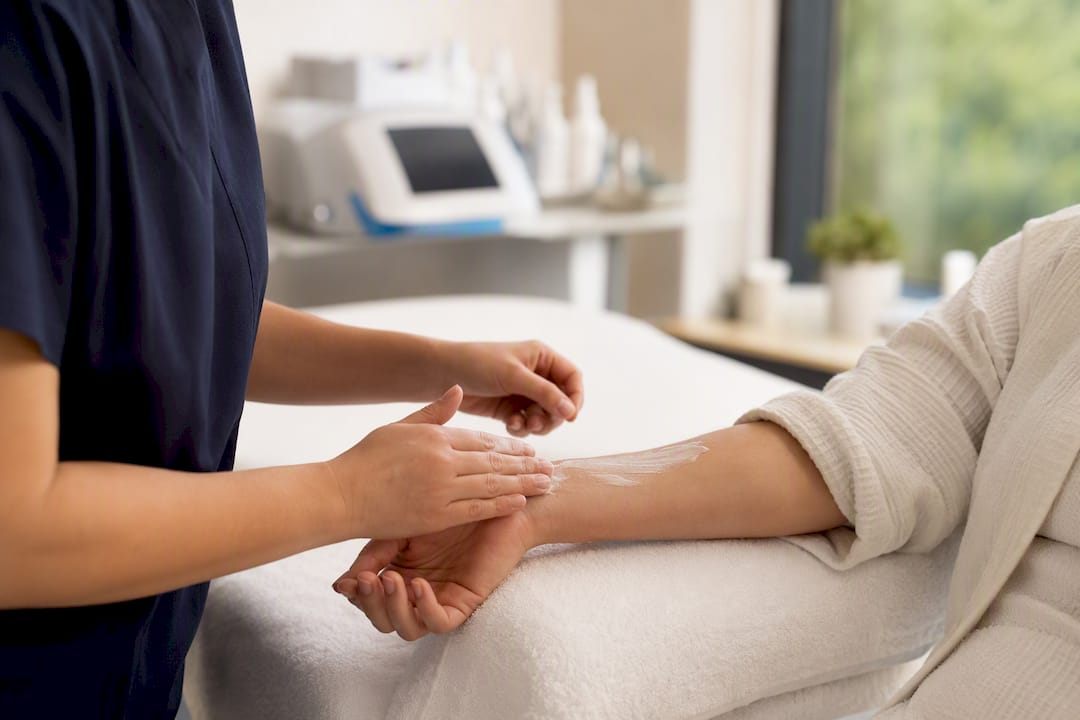
Convert. “What to expect” landing-page style posts, paired with a direct booking link, move readers from curious to scheduled. Comparison content (in-office treatment vs. at-home options) helps aesthetic and dermatology clinics specifically. A downloadable pre-visit checklist captures emails for follow-up sequences. Service spotlight posts, one per specialty offered, keep your full menu visible instead of only your most popular procedure.
Build trust. Patient stories and case studies with documented consent are strong signals here, especially when structured to show expectations, recovery, and outcome in that order. Staff spotlights humanize the practice, particularly useful for physiotherapy and primary care where ongoing relationships matter more than one-time transactions. Behind-the-scenes sterility and safety content reassures anxious surgical or dental patients. Community involvement posts, sponsoring a local event, a charity drive, build local goodwill that shows up later in reviews.
Engage. Polls asking patients to vote on topics for next month’s blog. Caption-prompt posts inviting patients to share their own tips (nutrition, stretching routines, oral hygiene). Simple Q&A story stickers on Instagram. Light, non-clinical content, a “day in the life” reel, a team lunch photo, keeps the account feeling human between the heavier educational posts.
Flag anything showing a patient’s face or identifiable details: before-and-after photos and testimonials require signed consent on file before publishing, every time.
Which Platform Fits Which Post
Instagram: Reels built around “60 seconds: what to expect during X procedure,” and Stories for behind-the-scenes moments. Caption style stays short and warm; hashtags mix local tags with specialty tags. Best for reaching both local patients and referral sources. AdJet’s Instagram guidance for dental practices breaks down posting cadence in more detail.
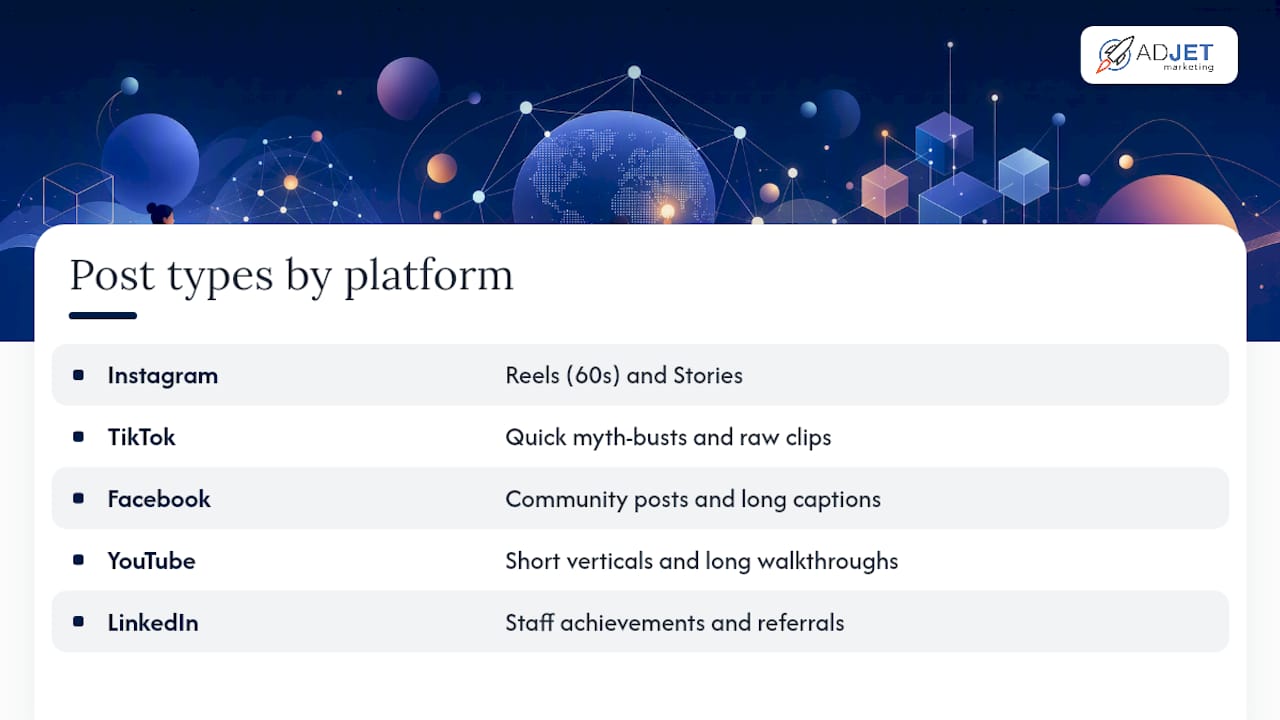
TikTok: Quick myth-bust videos with a before-and-after montage, or a “things patients ask us every week” series. Lean into raw, unpolished authenticity here over Instagram’s curated feel.
Facebook: Longer captions work, community posts, event announcements, and testimonial shares perform best with an older, local patient base.
YouTube: Short-form vertical clips (under 60 seconds) mirror TikTok content, while longer procedure walkthroughs build search authority over time.
LinkedIn: Staff achievements, practice growth milestones, and referral-partner content aimed at other providers, not patients directly.
Boost seasonal or high-value posts (a limited-time consult offer); let evergreen educational content grow organically.
Captions, CTAs, and a Cadence You Can Sustain
Adapt these caption starters: “Here’s what nobody tells you about…”, “3 signs it’s time to see a…”, “Patients ask us this every week:”, “Before your next appointment, know this:”, “Meet the team behind your care”, “Real patient, real results (shared with permission).”
CTA templates by stage: awareness posts end with “Follow for more tips like this.” Consideration posts point to “Download our free guide.” Decision-stage posts use “Book your consult today,” linked directly to a booking page.
Hashtag groups: pair one local tag, one specialty tag, and one campaign tag per post, don’t stack more than five or six total.
A sustainable cadence: three social posts weekly, one Reel or Short, and one newsletter monthly. Batch a month of content in a single afternoon rather than scrambling daily.
HIPAA and Consent Checks Before You Hit Publish
Non-negotiables: written, signed consent for any patient-identifying photo or video; no PHI in captions, even accidentally (a visible appointment card in a photo counts); never diagnose or offer medical advice in comments; clinical claims get clinician sign-off before posting.
Quick pre-publish checklist: consent form on file, media stored securely with limited access, caption reviewed for identifying details.
Pro Tip: Assign one content owner and one clinician reviewer by name. Bottlenecks happen when “someone” is supposed to review, but no one specifically is.
For negative reviews: acknowledge publicly and briefly, move the conversation to a private message or phone call, and document the exchange internally.
Building a Calendar You Can Actually Keep Up With
A four-week sample: Week 1, educational (procedure explainer); Week 2, trust-building (patient story); Week 3, engagement (poll or Q&A); Week 4, seasonal or local guide.
- Batch once, publish for weeks. A two-hour shoot day can produce several Reels, short clips, before-and-after photos, and a blog’s worth of supporting images.
- Repurpose in one direction. Turn a long-form blog or guide into a short video clip, then a carousel post, then a newsletter snippet, so one asset becomes four.
- Slot in seasonal hooks. Awareness months, allergy season, or local events create predictable spikes in search interest, so plan those weeks ahead of time rather than scrambling.
What to Measure, and What to Ignore
Track four to six metrics, not twenty: organic traffic, consultation requests through your forms, click-through rate on booking pages, social engagement rate, and email open or click rate. Traffic and engagement map to awareness goals; form submissions and booking-page clicks map to conversion.
Run experiments instead of guessing: A/B test a caption’s CTA, compare a short video against a static image, boost a seasonal local ad, or gate a guide behind an email form. Give each experiment 30 to 90 days before judging it, and measure actual patient inquiries, not just likes.
How a 30-Day Clinic Content Plan Comes Together
- Week 1, discovery. Review existing clinical documents, aftercare instructions, FAQs, that can be repurposed with minimal production cost.
- Week 2, batch day. One shoot day covering clinician Q&As, procedure walkthroughs, and testimonial footage.
- Weeks 3 to 4, publishing. Posts go out on the cadence set earlier, with a reporting check-in at day 30.
Budget realistically: an in-house effort needs a phone, basic lighting, and two to three hours weekly; an agency partnership shifts that time cost but adds strategy and consistency. A simple content brief should route through clinician review before anything with clinical claims goes live.
Pro Tip: Don’t expect organic content to move bookings in week one. Consistency, applied for 90 days, beats a single viral post almost every time; paid promotion can lift bookings faster but costs more per lead upfront.
Turning Patient Reminders Into Ongoing Education
Appointment reminders and follow-up messages are among the most-read communications a clinic sends, and most practices waste that attention on a bare date and time. Add one short educational line: a pre-visit reminder for a dermatology consult might include “Avoid sun exposure 48 hours before your appointment,” while a physiotherapy follow-up could link to a 90-second stretching video relevant to the patient’s treatment plan.
Post-visit follow-ups work the same way. A dental patient who just had a filling benefits from a short aftercare note with a link to a longer blog post on sensitivity management. This does double duty: it reduces the phone calls your front desk fields for routine questions, and it reinforces the educational content you’re already publishing elsewhere.
Keep this content separate from anything containing PHI. A reminder can link to a general educational page without referencing the patient’s specific diagnosis in a way that exposes personal health information if forwarded or seen by someone else. The safest approach links to public-facing blog content, the same explainer posts and myth-vs-fact pieces already covered above, rather than writing new personalized clinical content into every message. It’s a low-cost way to extend your content’s reach without producing anything new.
Common Mistakes Clinics Make, and How We Fix Them
The recurring errors: inconsistent posting, ignoring local SEO, weak or missing CTAs, and never tracking which posts actually drive bookings. Our fixes are usually structural: content pillars so posting doesn’t depend on inspiration, geo-targeted pages for local search, and a simple dashboard tying posts to form submissions. One clinic that switched from sporadic posting to a fixed weekly pillar saw its consult requests become far more predictable within two months.
Where AdJet Marketing Fits Into Your Content Plan
Everything above is doable in-house, but most clinics we talk to run out of time before they run out of ideas. AdJet Marketing produces the content batches, manages the publishing calendar, and builds the SEO and Google Ads structure underneath it so the content actually leads somewhere, a booking page built to convert, not just a feed that looks active. Every clinical claim we help publish gets routed through your clinician review process first; we don’t touch that step. If you want a starting point rather than a full engagement, download the Medical Clinic Marketing Checklist for 2026 and run it against your current calendar, it takes about fifteen minutes and will show you exactly where the gaps are.
Sources
A social scheduler (for batching posts), a simple mobile video editor (for clips and Reels), and the Medical Clinic Marketing Checklist cover production and compliance. For strategy background, Pabau’s content marketing guide and this clinic storytelling guide are worth a read.
- Healthcare content marketing: A guide that fills appointments | Pabau
- Content Strategy For Primary Care Practices | Prospelle
- Healthcare Content Marketing Ideas to Grow Patient Traffic | GrowLimo
Recommended
- What Blog Topics Attract High-intent Patients? → 40 Buyer-Ready Ideas – AdJet Digital Marketing & Google Partner Agency | SEO Development Google Ads Social
- Medical Clinic Marketing Checklist For 2026
- How To Optimize Your Clinic Website For More Patients
- Clinic Local Citations: Quick Audit & Claim Checklist